
Belgrade
NEVENA MARTINOVIĆ
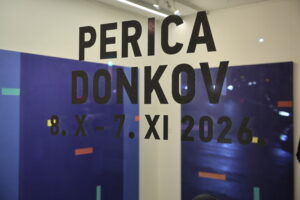
CON_SEQUENCES – NEW DISCOVERIES OF PEERICA DONKOV
This cycle of works has shown that I have always been engaged in finding a place.
I am happy to know that there is still „passion“ of creativity in me to „arrange the space“
and be met in glory by something absent. (Perica Donkov)
If we tried today, after more than forty years of Perica Donkov’s artistic practice, to find the concepts that most precisely define it, then they would certainly be the spiritual meaning, symbolic language and spatial experience. First of all, in this radically profane everyday life of this hyper-consumer society and digital age, it is necessary to repeat that Donkov stubbornly and exclusively departs from the position of the one “who believes in the existence, endurance and supremacy of the spiritual over the material”. This line, as a sine qua non of his art, cuts through abstract form and unifying meaning of all of his individual works, cycles and artistic projects. Therefore, not a single visual element in the painting of Perica Donkov has been chosen only because of its visual, retinal properties. The colour and the relationship of lines and surfaces, the orientation and format of the works, or even the tactile/physical quality of a painting – all these elements are chosen for their potential to speak about the hidden values related to their plastic appearance. They have been transferred from life into painting by selective symbolic means, parts of the experience which equally exist both in the profane and religious reality as common and unifying exponents of man’s spiritual world. Donkov chooses one of the oldest and most potent symbols of rise and success, of overcoming and achieving, of the search for higher degrees of existence, victory and salvation. Fully purified and simple vertical position in Donkov’s works communicates equally with the religious man who sees it as the ladder for the salvation of his soul and also with a non-religious corporate official who sees in it his own ambition for a higher professional position. In both cases Donkov’s works realize their connection with the viewer by means of the symbolic language hidden in the deepest layers of man’s psychological structure and preserved as the collective heritage from ancient times when the relationship between man and the world was primarily sacred. And finally, his paintings are non-representative and purely abstract – because they stem from and transport to the viewer the initial spiritual experience – the experience still on the level before the thought, the feeling of personal existence before it has been made concrete through a religious or profane context.
(…)
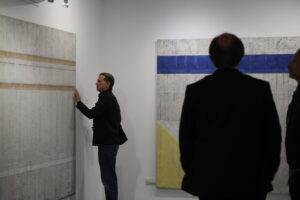
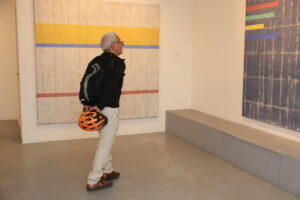
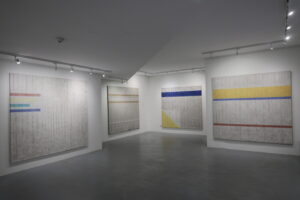
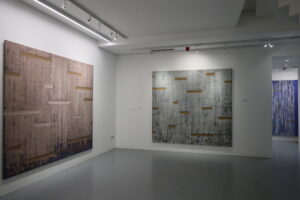
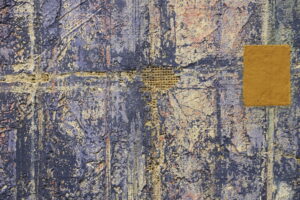
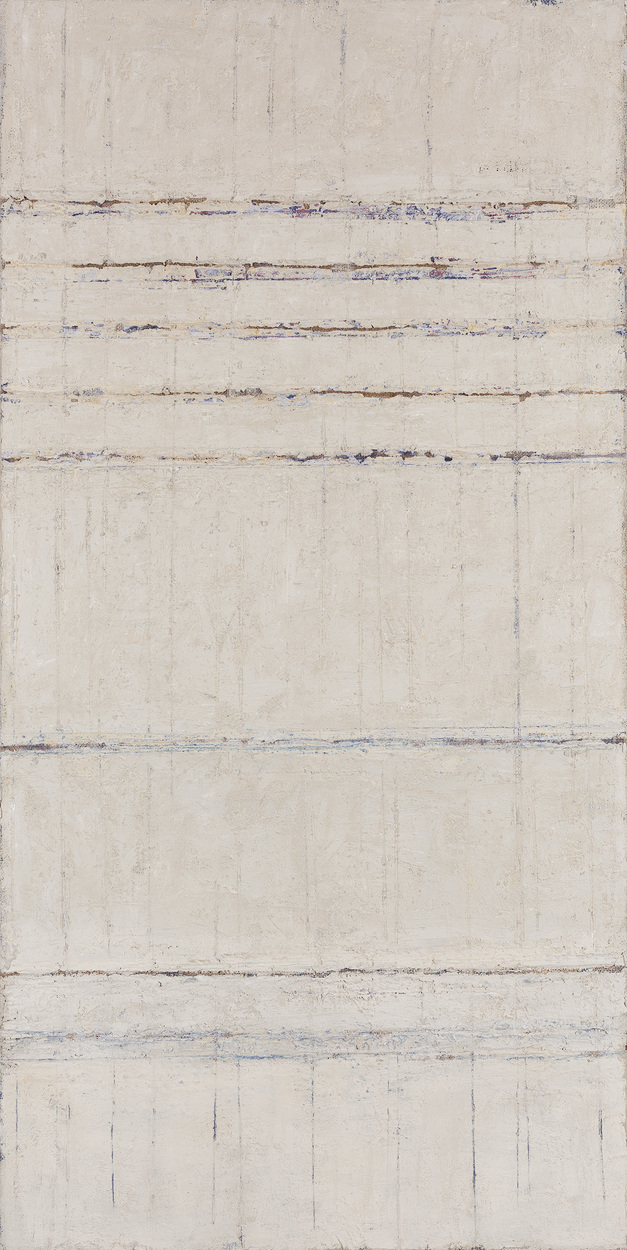
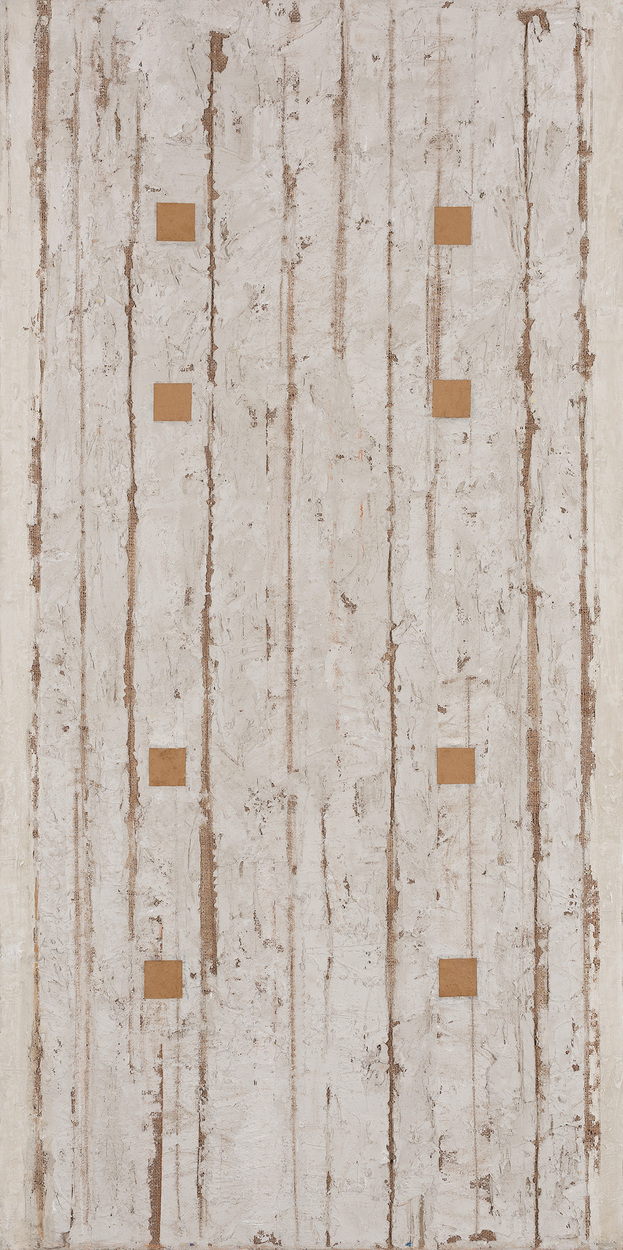
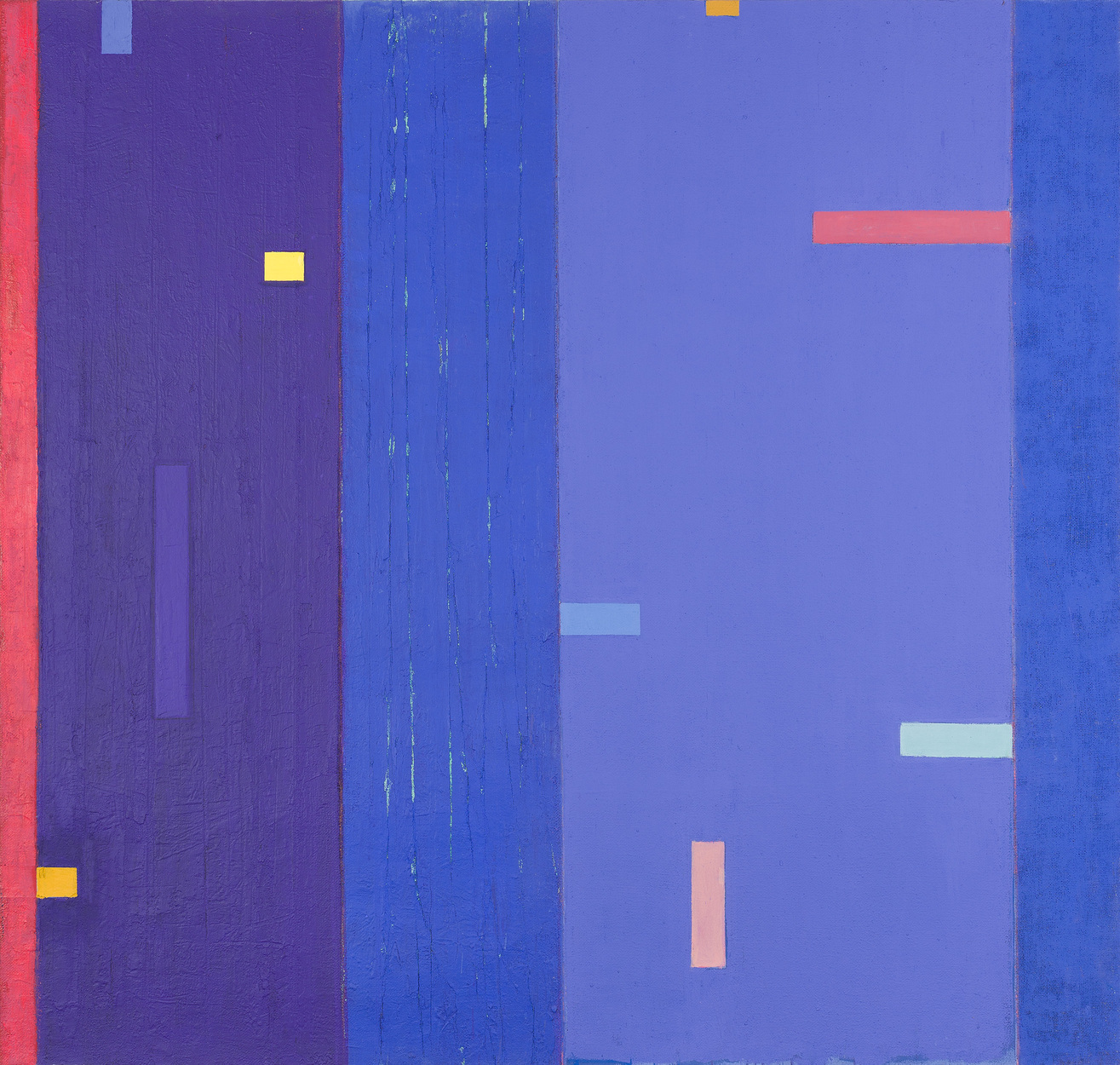
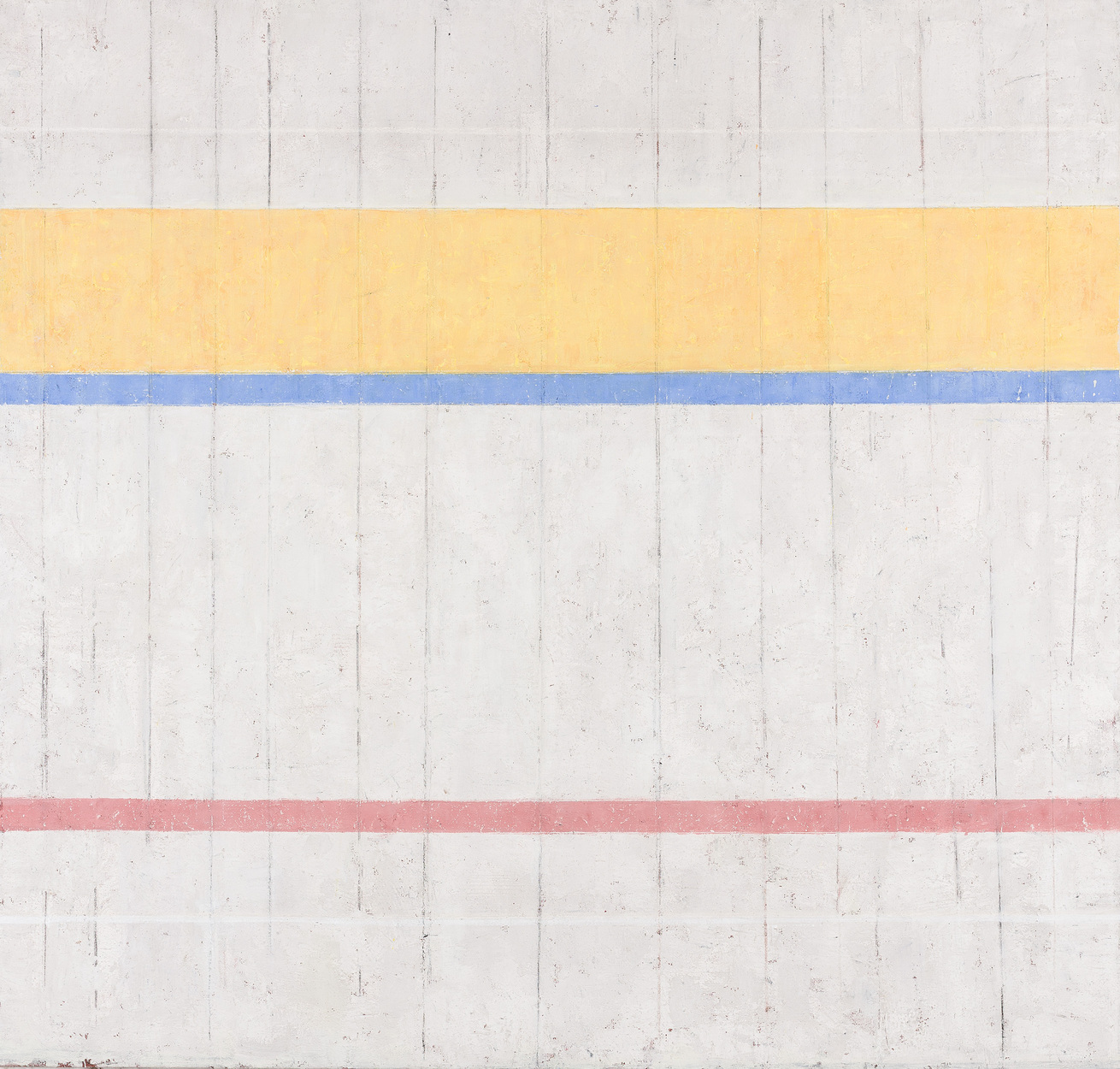
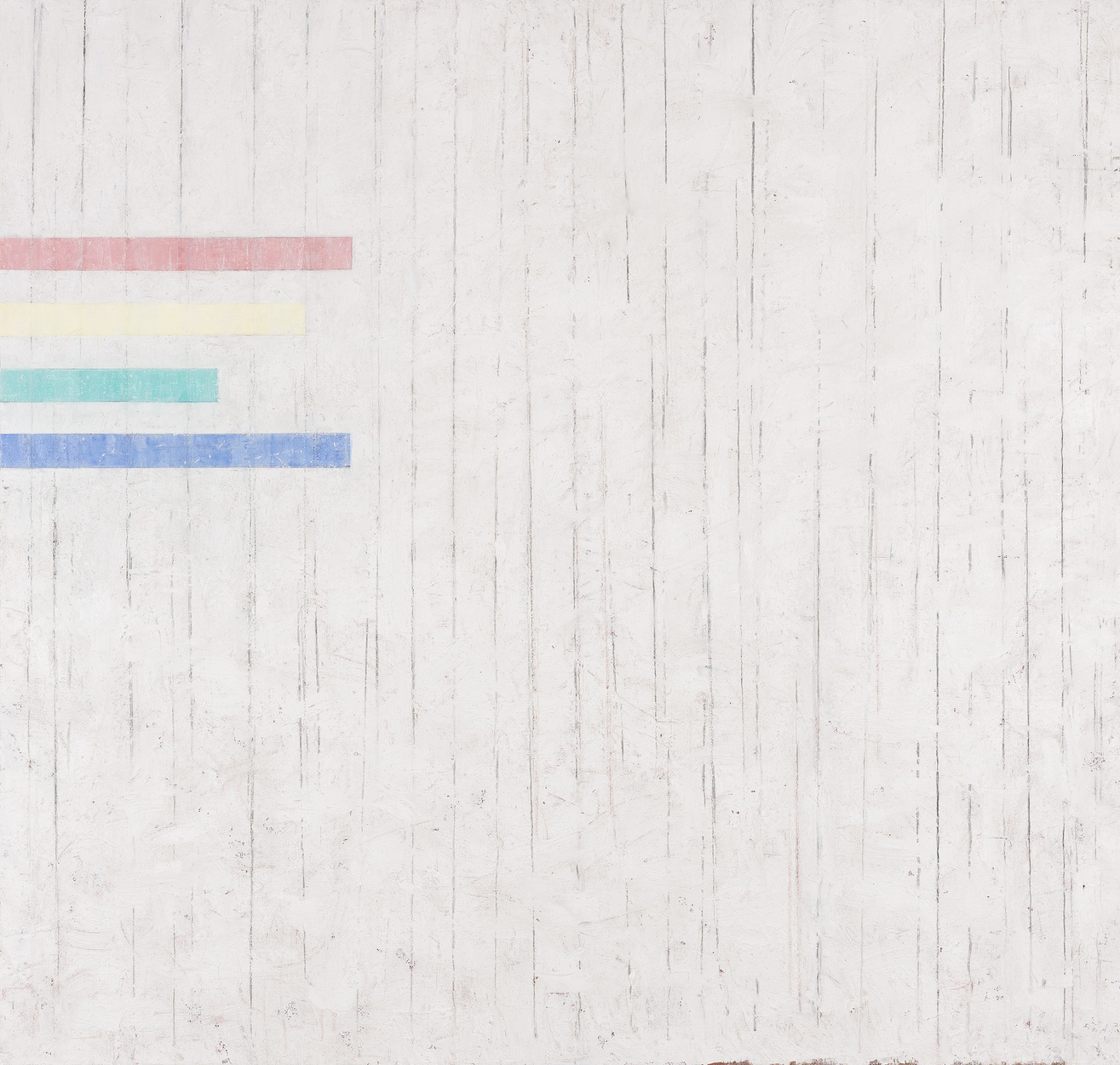
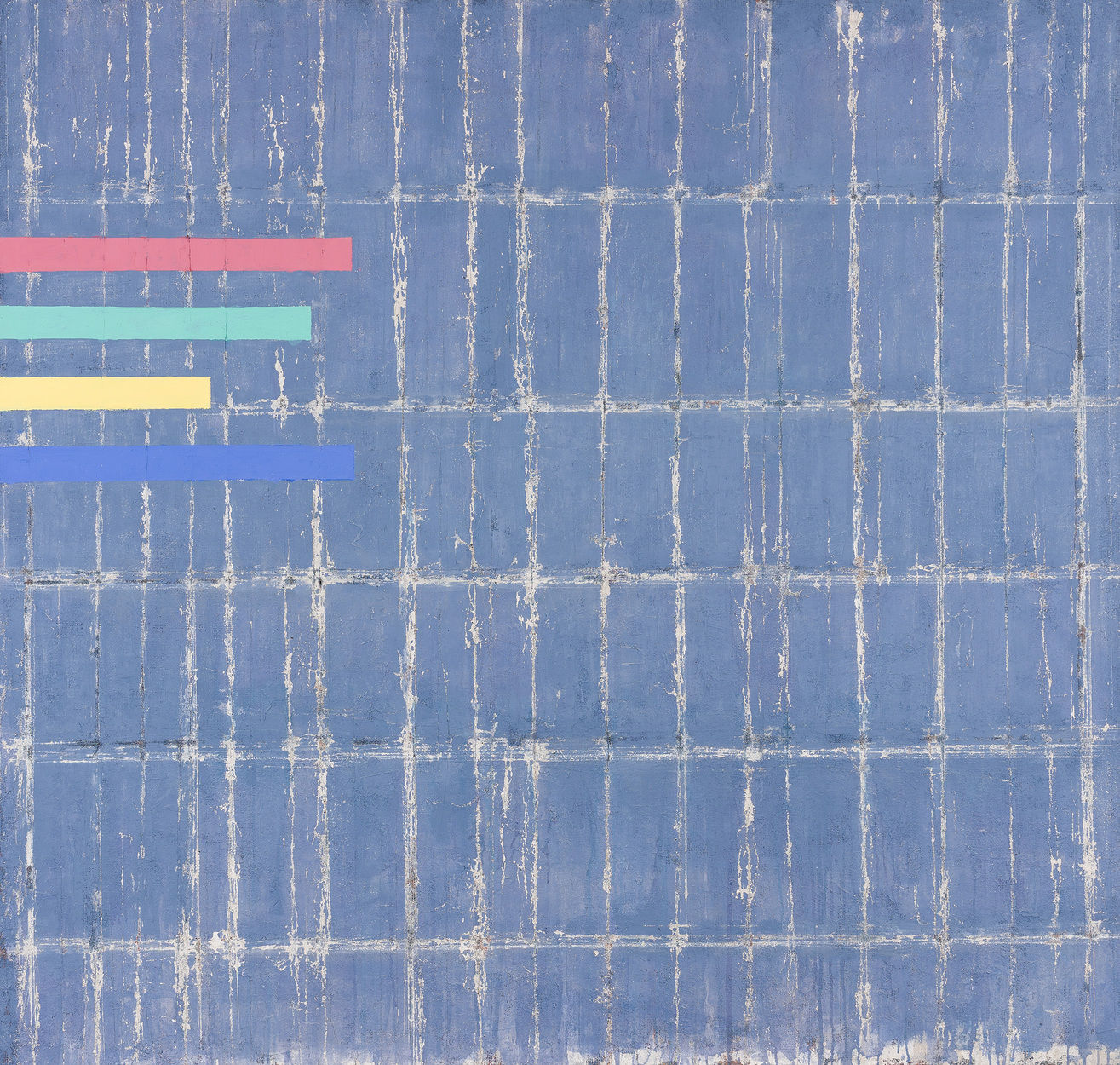
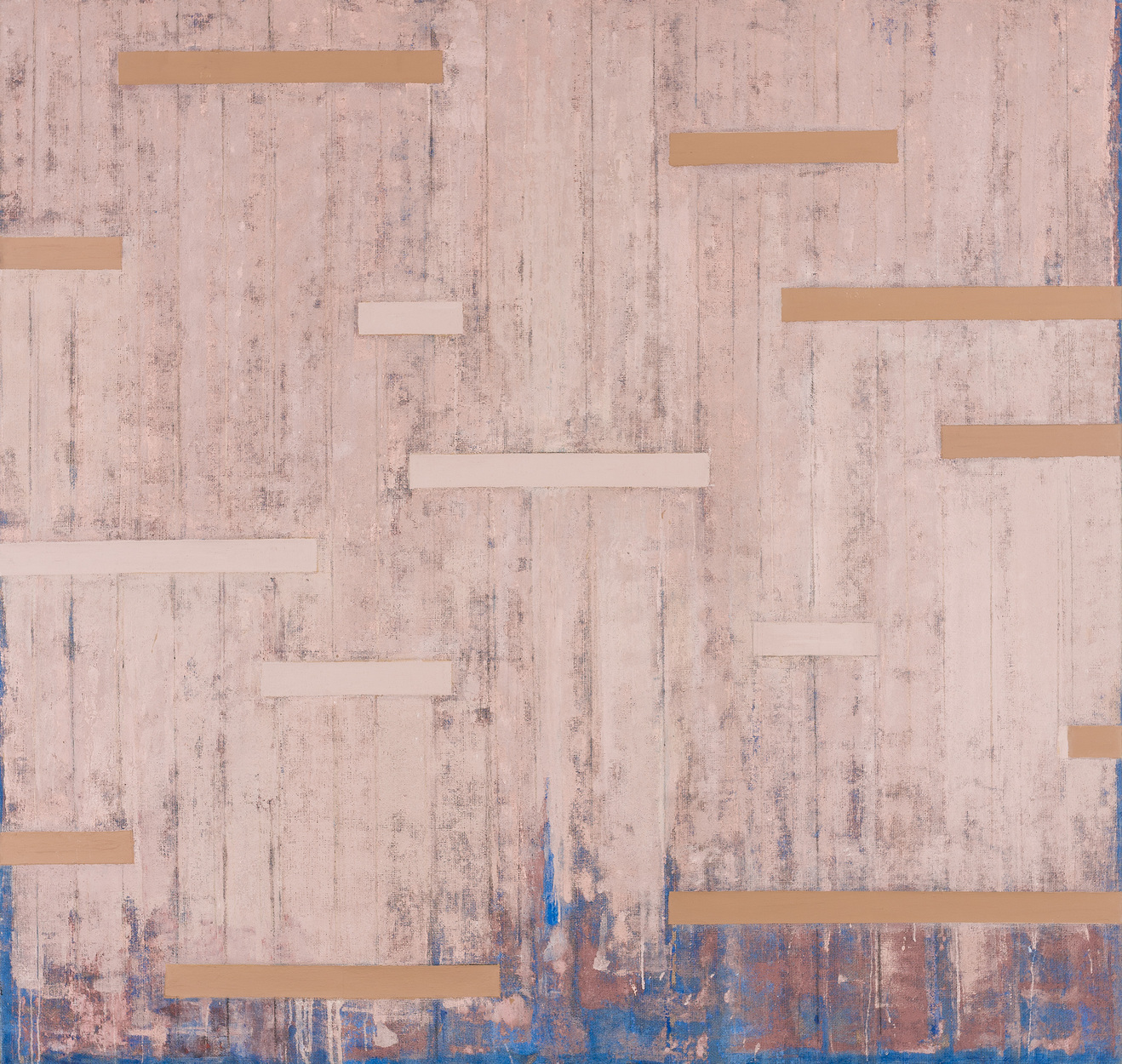
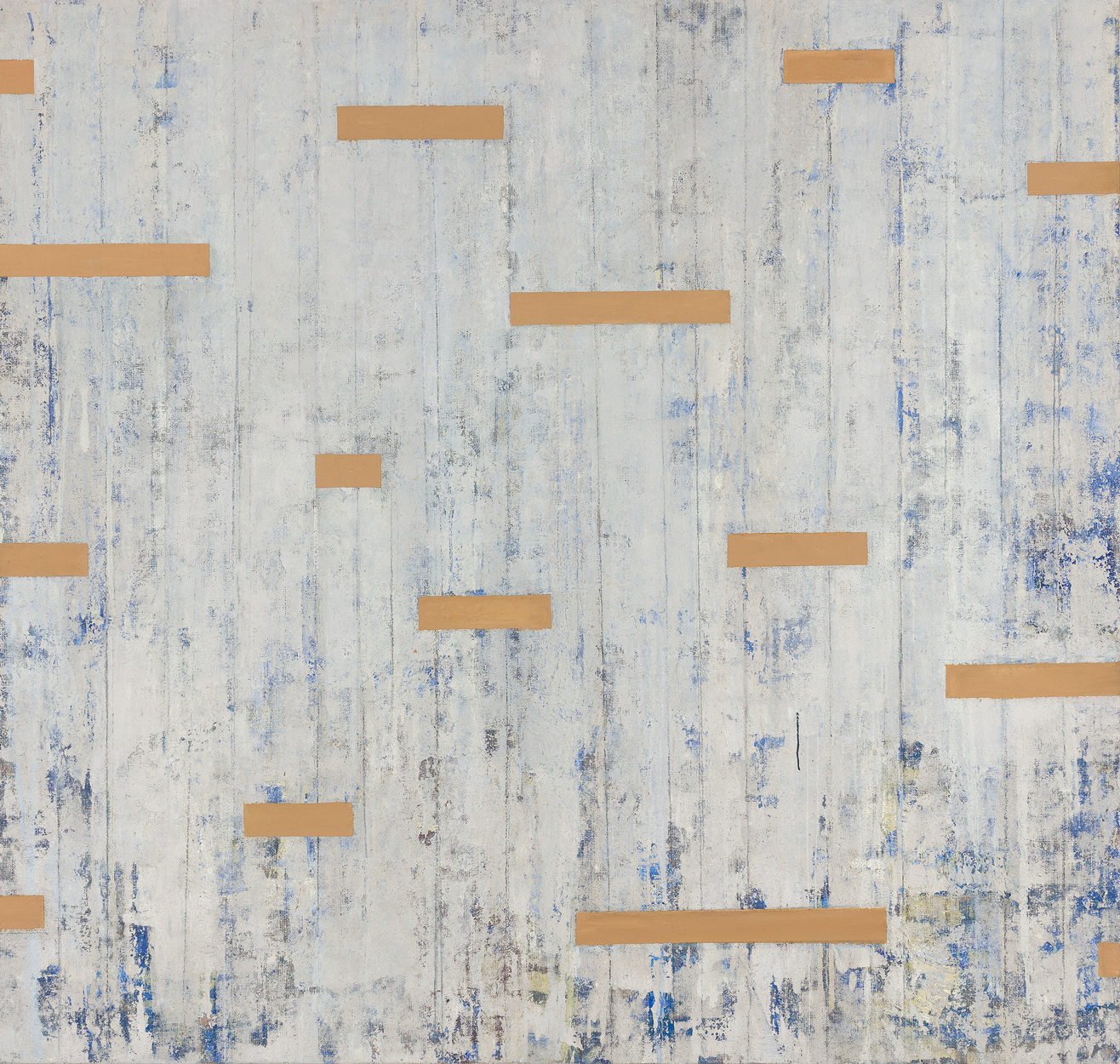
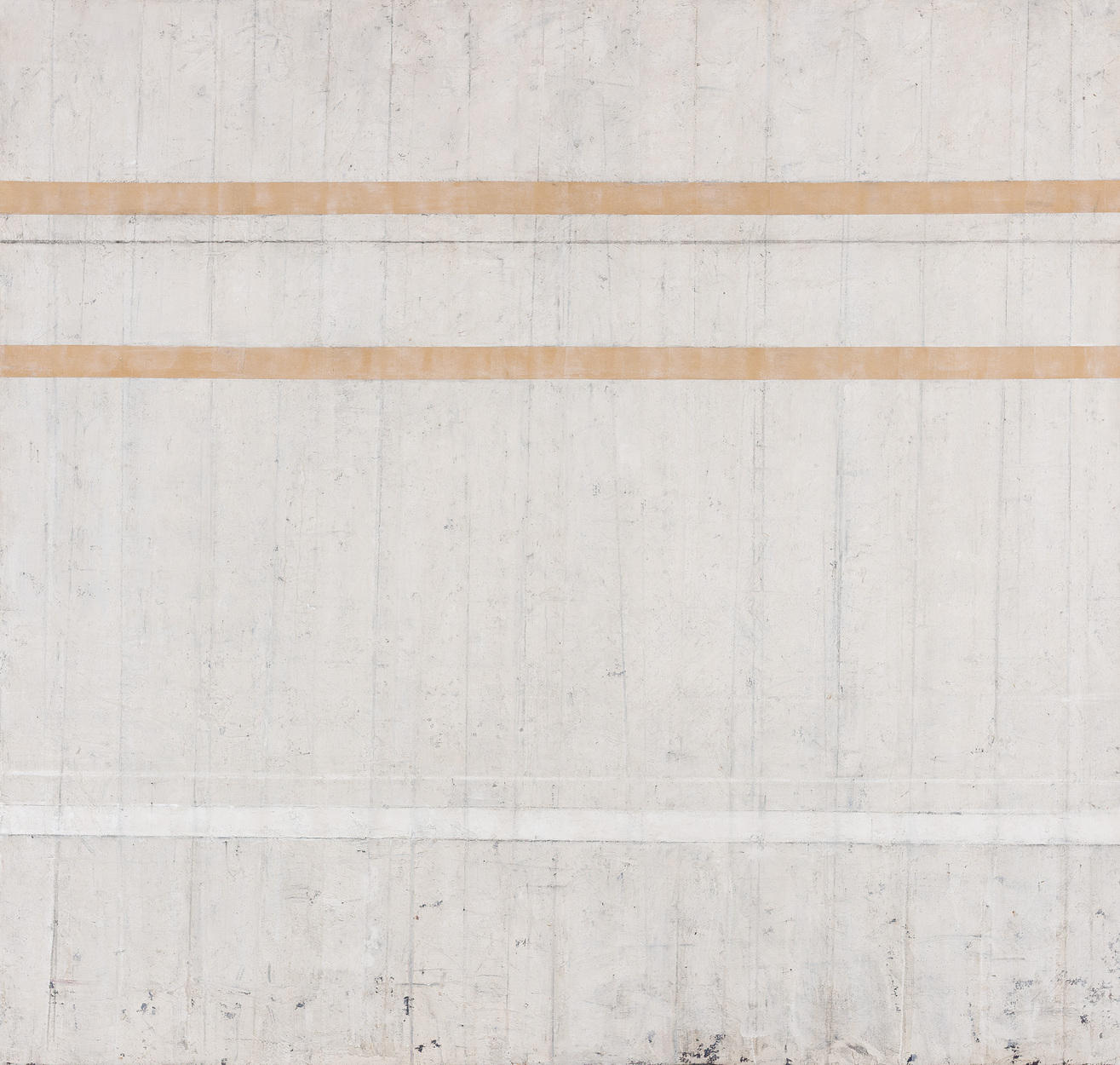
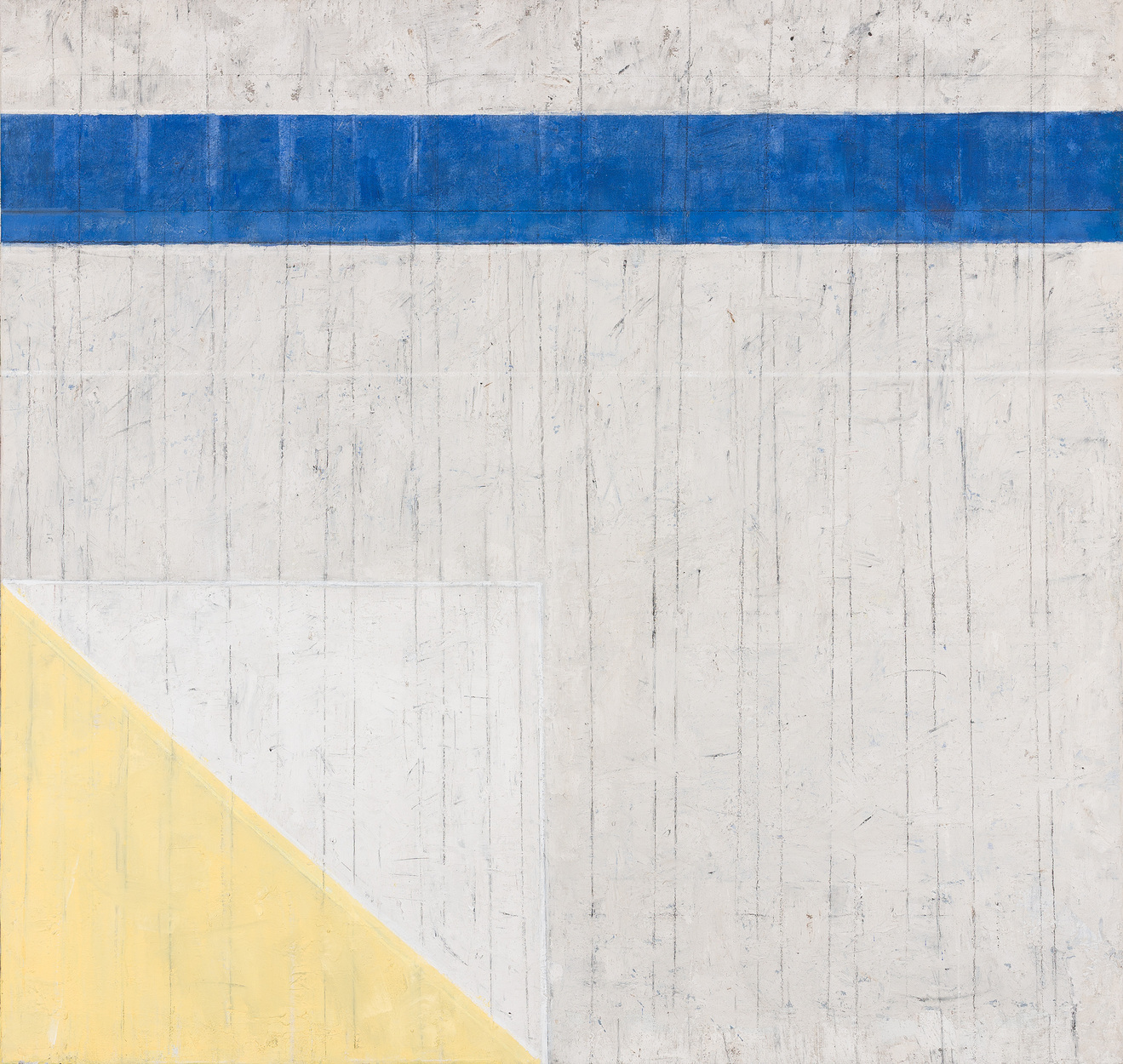
At the first sight, the latest cycle of Perica Donkov’s paintings impresses one as a known environment where fragments of something new appear and multiply. His paintings, still mostly on sackcloth, painted with acrylic paints, keep the general characteristics of abstract structures. Monumental surfaces, subdued, but mostly light coloured, are divided with horizontal continual planes that keep the association within the sphere of spatial movement encircling the space, and the verticals which refer to the old symbolism of axix mundi as one of the key carriers of Donkov’s art spiritual credo. Deep blue nuances have returned to his art in the cycle Cinema Utopia, thus concluding the long-lasting absence of colour. However, in his painting, the only one from that cycle with a trace of such mimesis, The Wave of Abstract Glow (2024), Donkov suggests something new – an illusion of a folded corner of the canvas. That painting is the first semantic signpost to the meaning of Donkov’s new place – the place of the feeling that there is something hidden , something “behind”, “other”, “additional”, in relation to our present cognition. The fact that a new abstract surface is hidden behind the folded corner reminds us that possible discoveries are still in the realm of spirited experience.
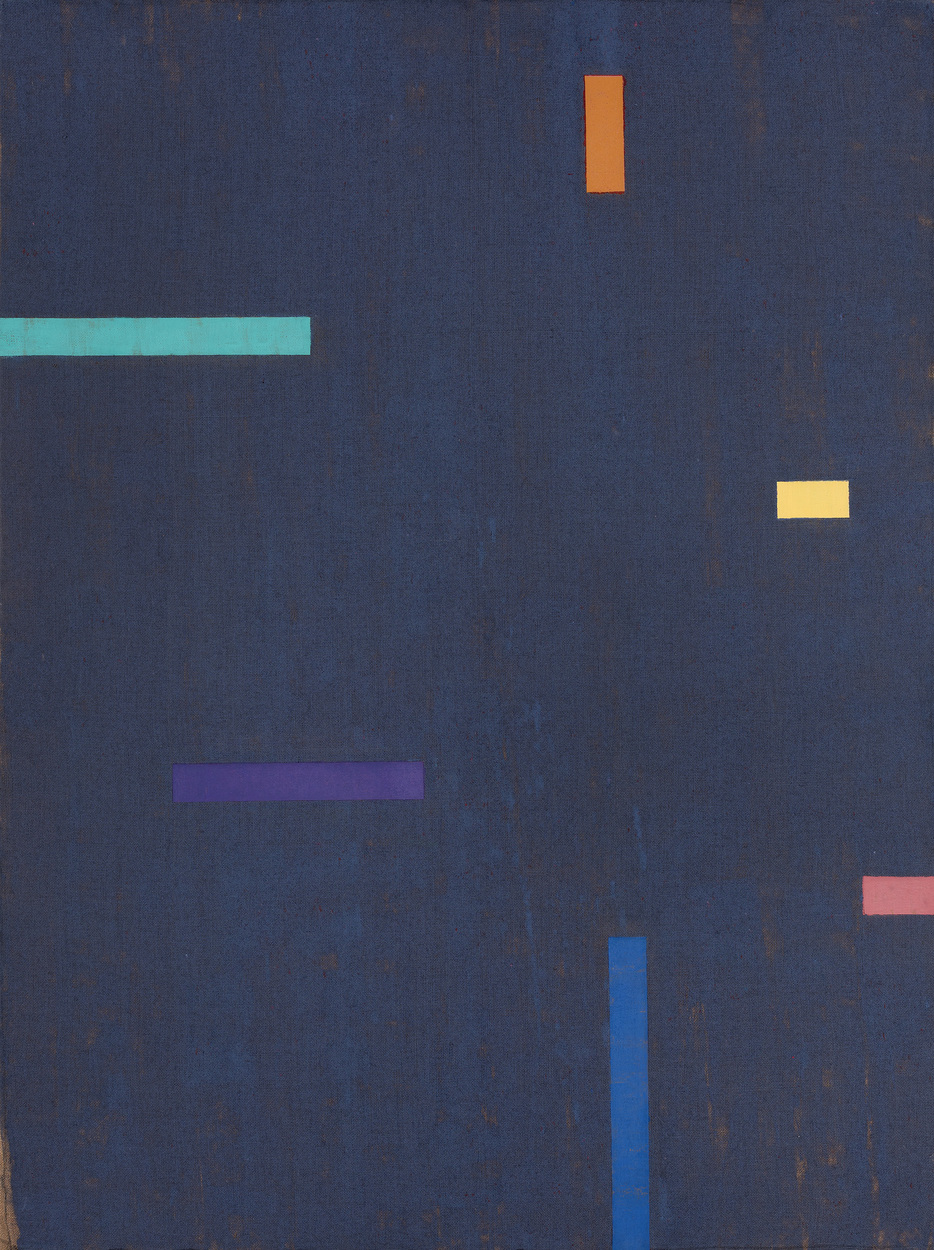
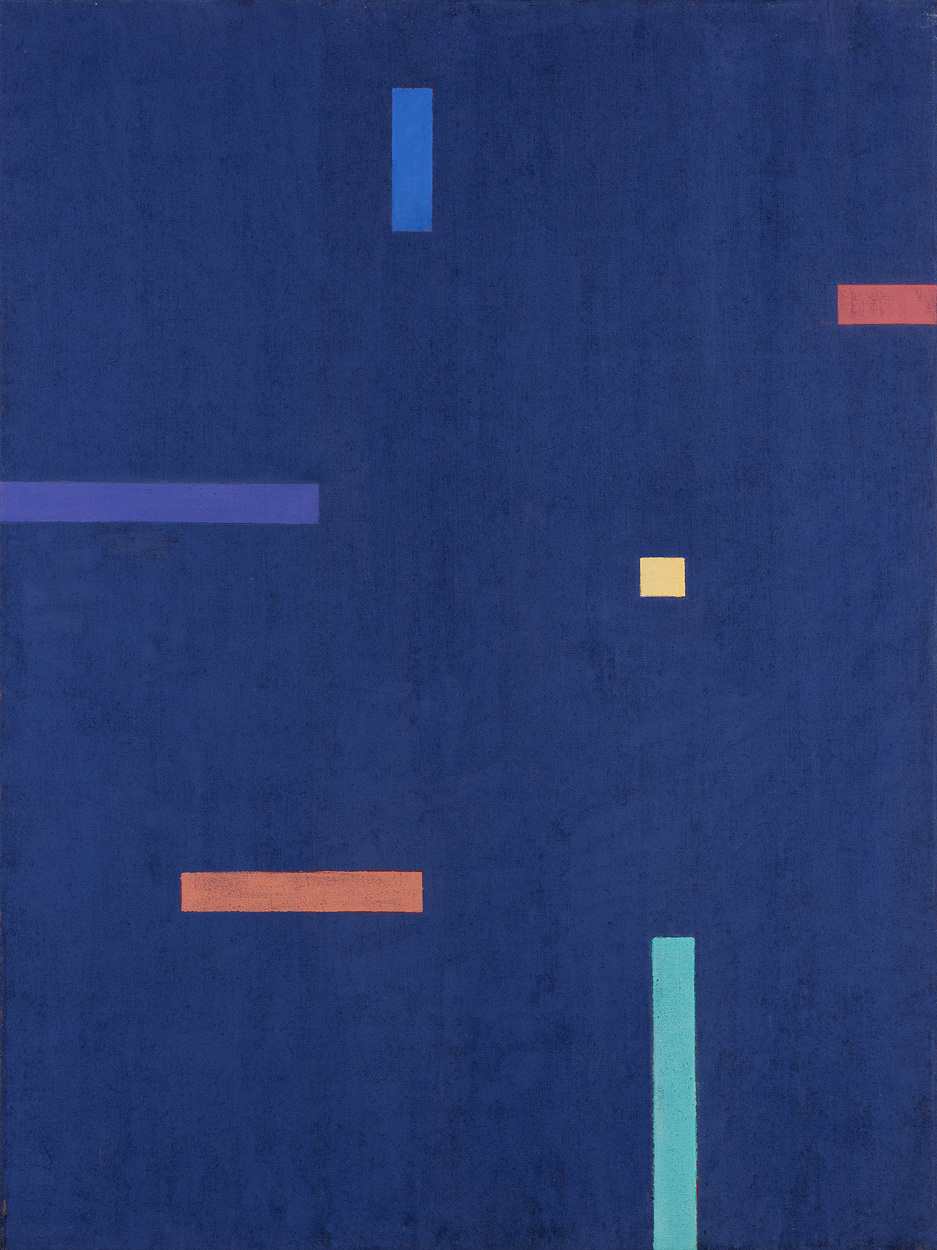
The “absent” hidden content appears in the form of ribbons, horizontal and vertical, arranged all over the surface, so that their presence openly changes the dynamism of the known abstract credo. These elements appear like a simplified information about something still unknown and undiscovered, as fragments of some new dimension in the rifts of the existing and known. The strong impression that it may be a different layer or different dimension, has been produced in the paintings Mute Information by an obvious misshaping of the canvas – by indentations that endow relief structure to the surface, shaped in the places of “information”. The same impression is procured by radiant colours in the paintings Sequences or Mute Spaces; the scattered fragments are painted in those colours that inevitably and immediately clash in comparison to the known chromatic scale of Donkov’s paintings. The choice that these particles of new contents should be shown as anomalies within a fully established organism, to be errors within a complete spiritual entity – that choice is Donkov’s preoccupation with the type and character of the pieces of information they transmit, but mostly with his experience of their embarrassing appearance suspecting change.
(…)
Full text in the print edition.
Works
Publications

- More about the artist