26. May - 26 June 2026
Belgrade
Nevena Martinović
On the role of the “given situation“ and marginal positions in the painting of Rade Tepavčević
A painting feels lived out to me,
Not painted.
Philip Guston
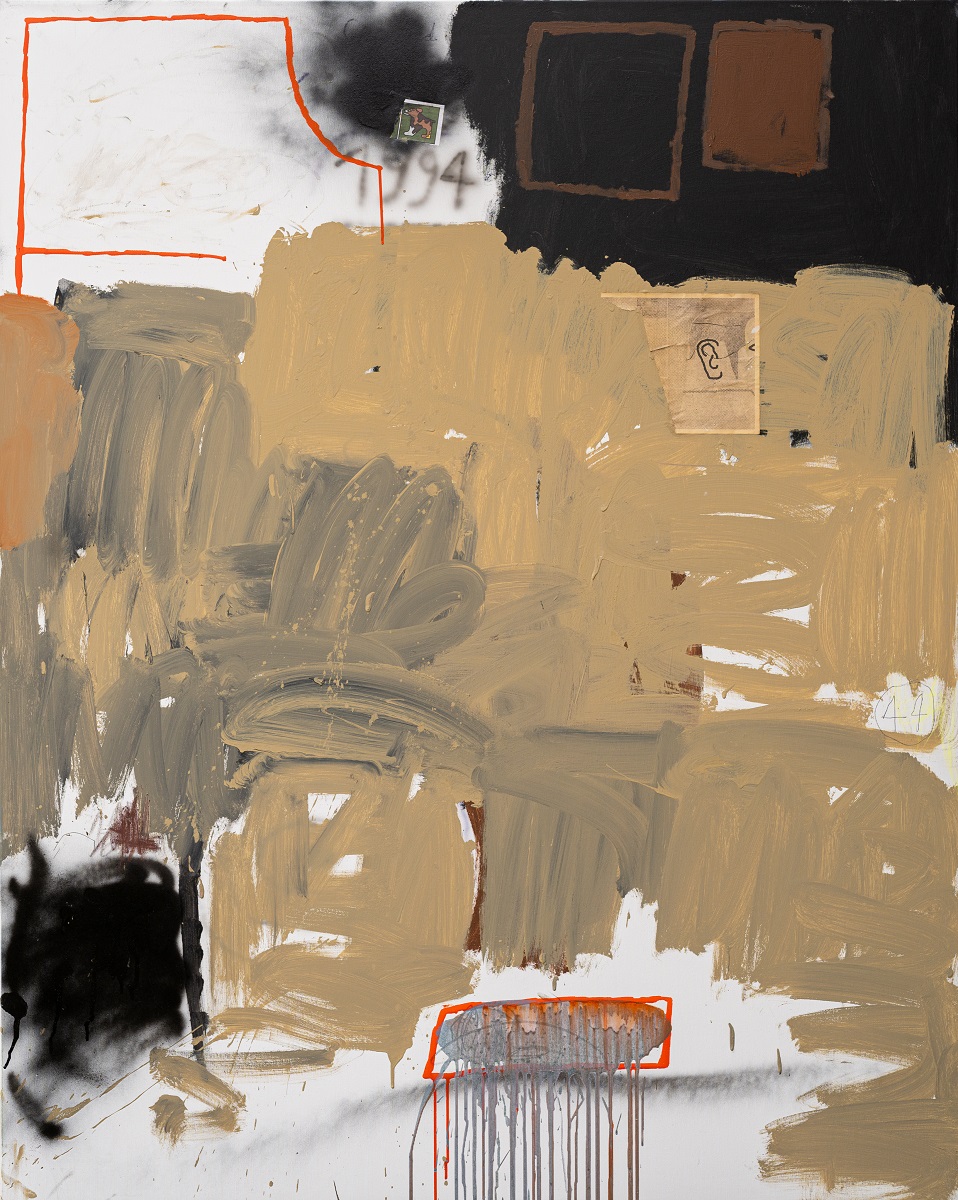
In our conversation conducted while we were choosing paintings for this exhibition, the artist Rade Tepavčević remembered that the beginning of work on canvas had always been very difficult for him if he had not had even a minimal trace of the visual situation on the white foundation. In practice and his creative maturing, Tepavčević realised that it was not the matter of inadequate idea, or the difficulty of painting, but his specific need to begin a painting by his own reaction to the existing, even random (or minute) visual stimulant – his need, as he himself put it, „for a given situation or state“.
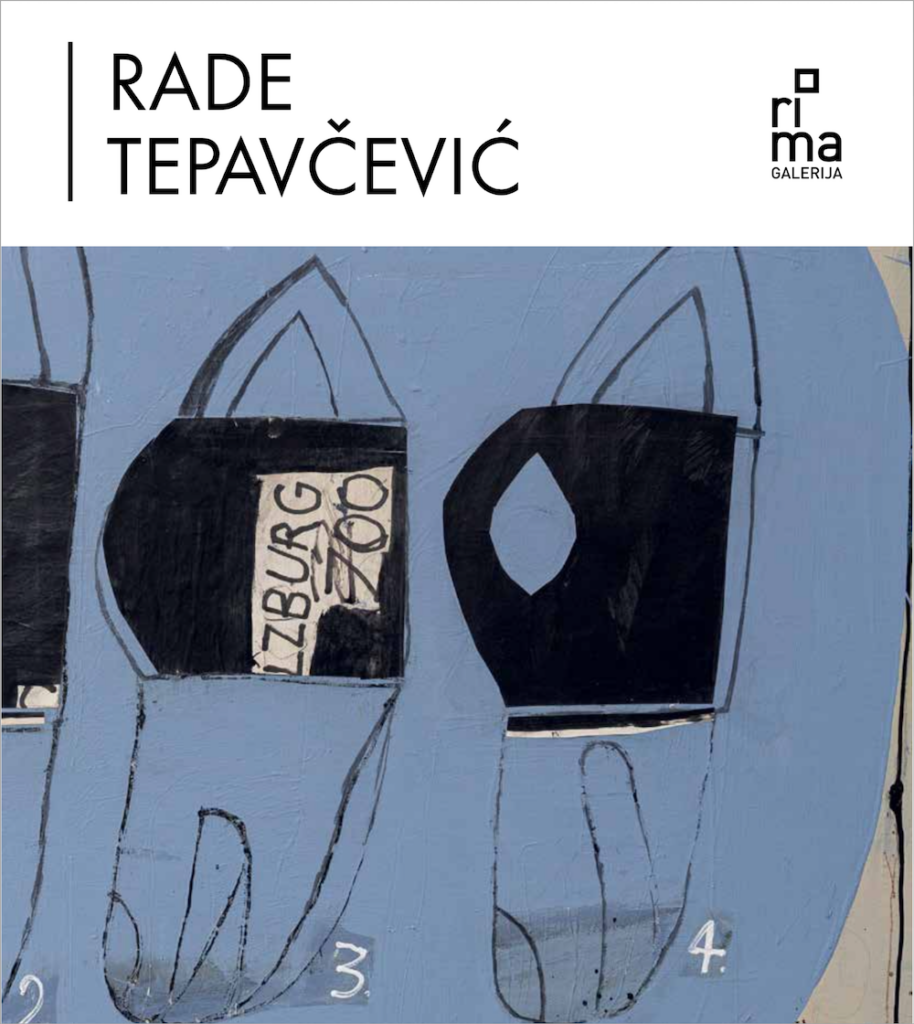
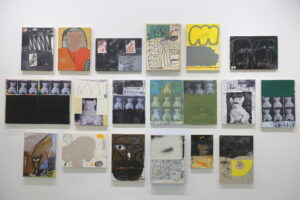
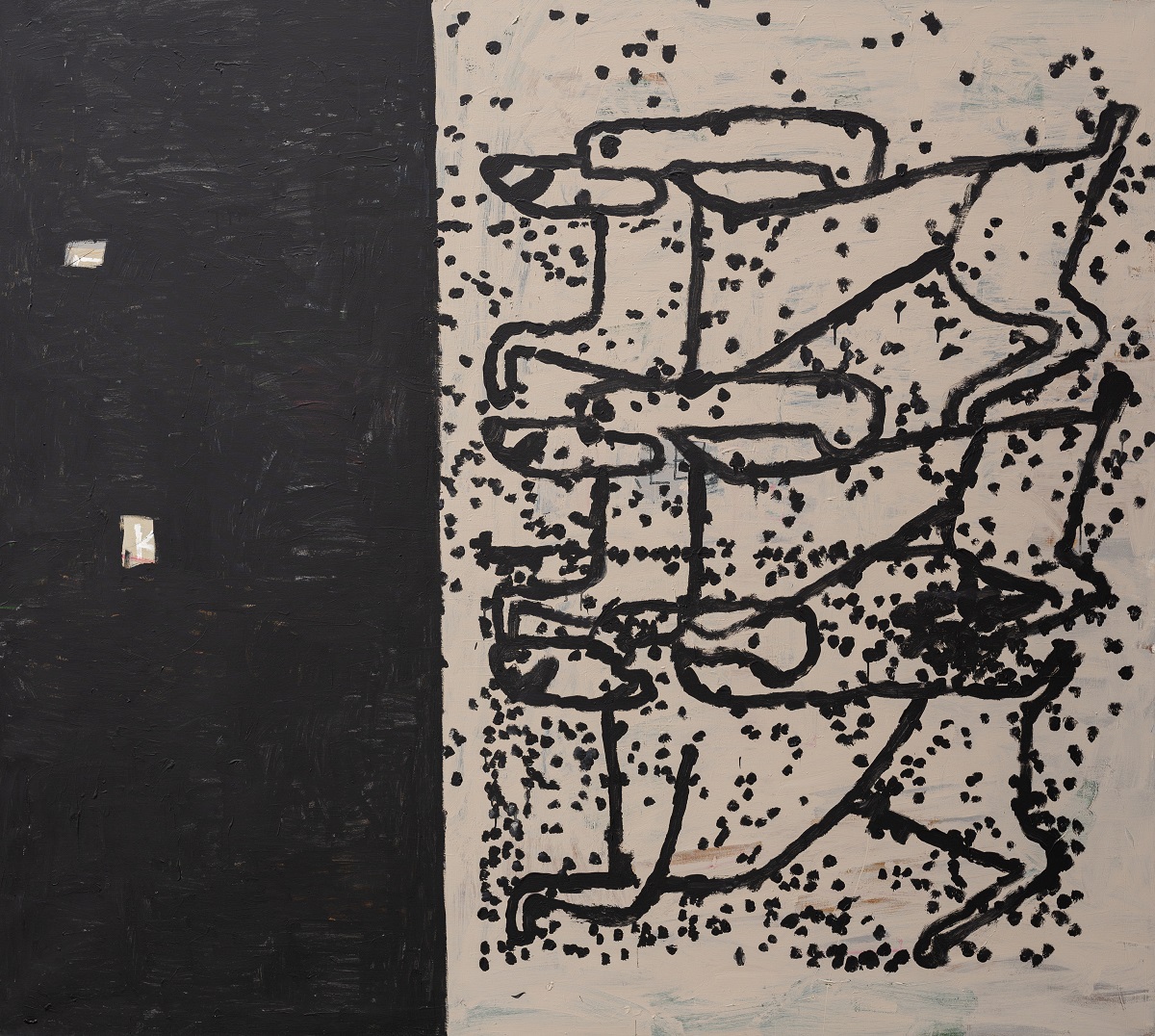
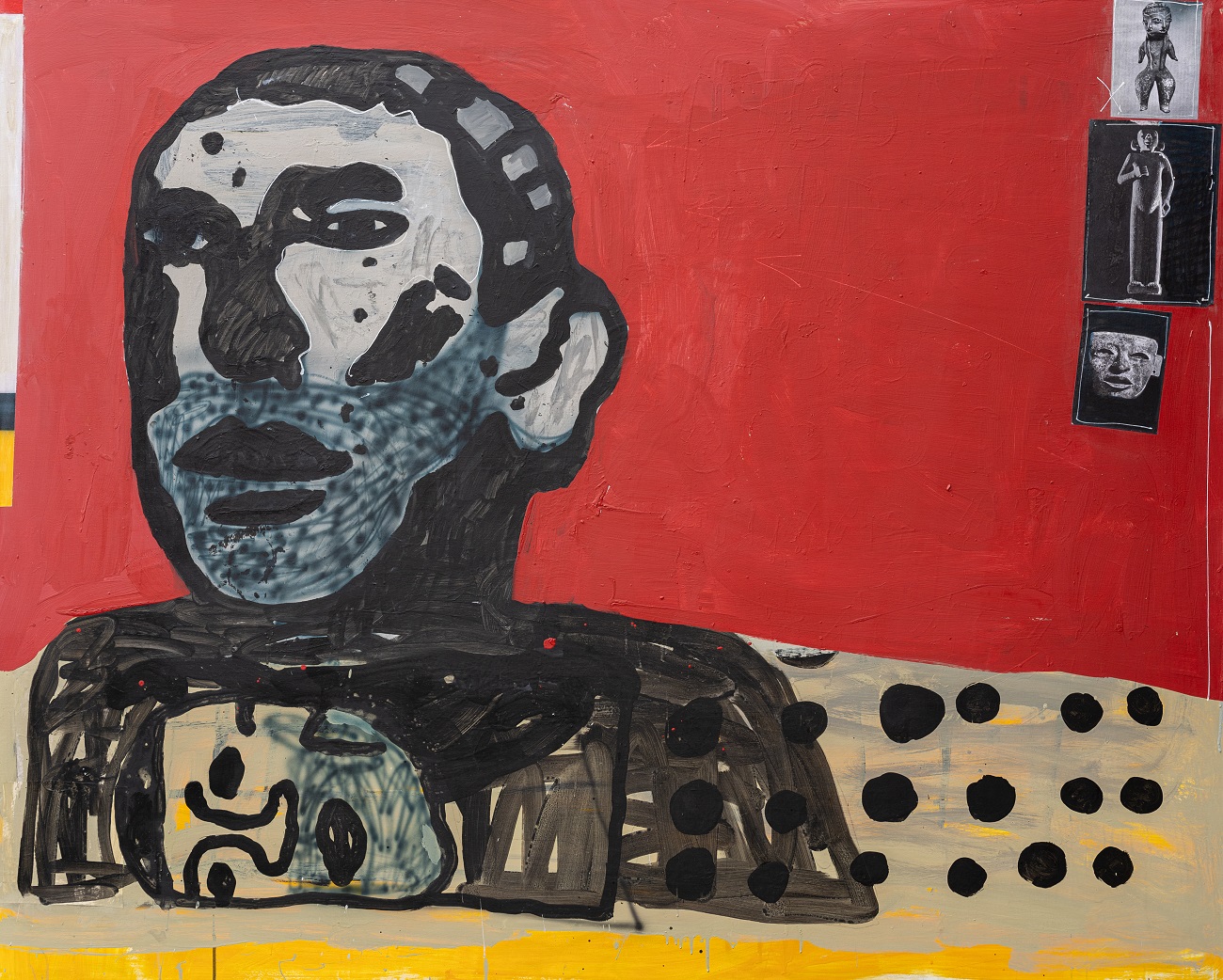
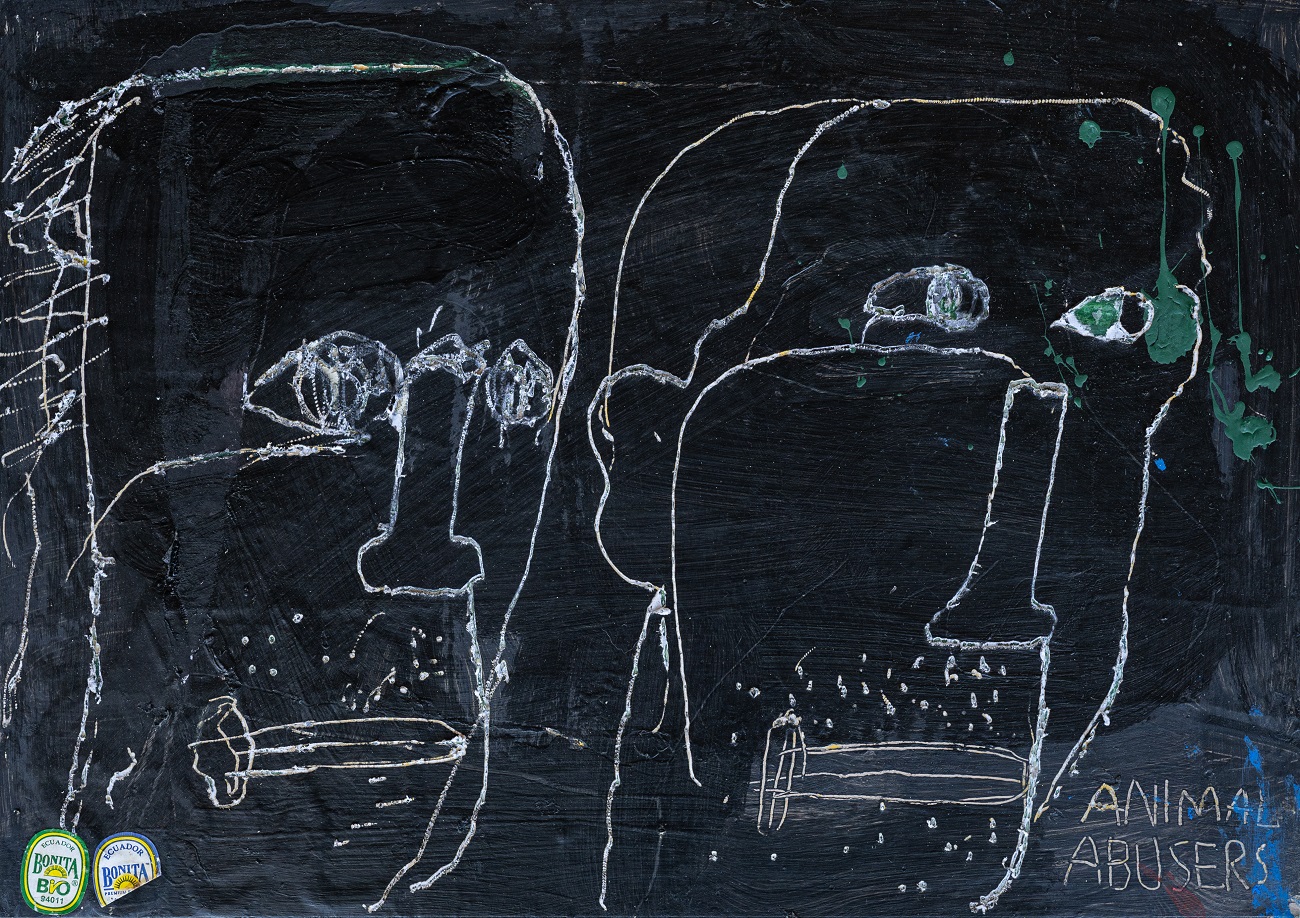
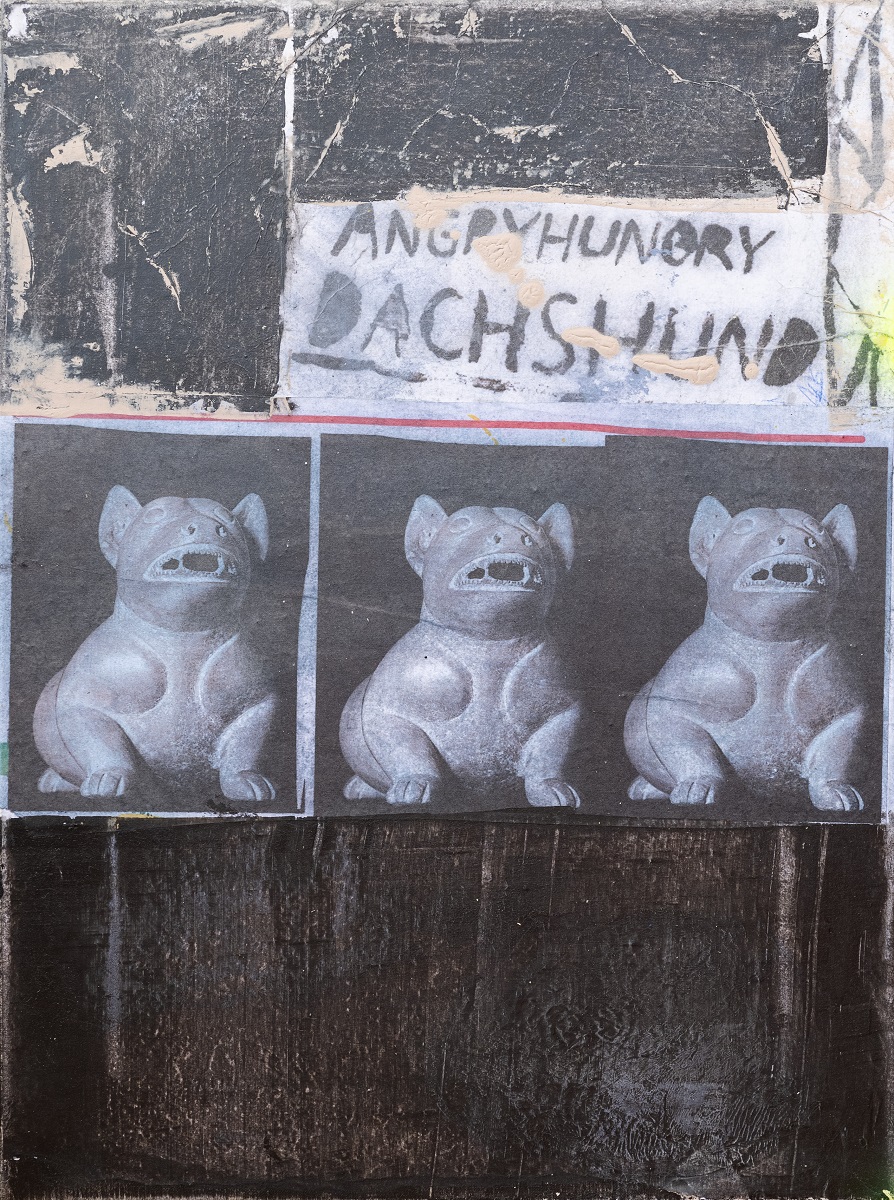
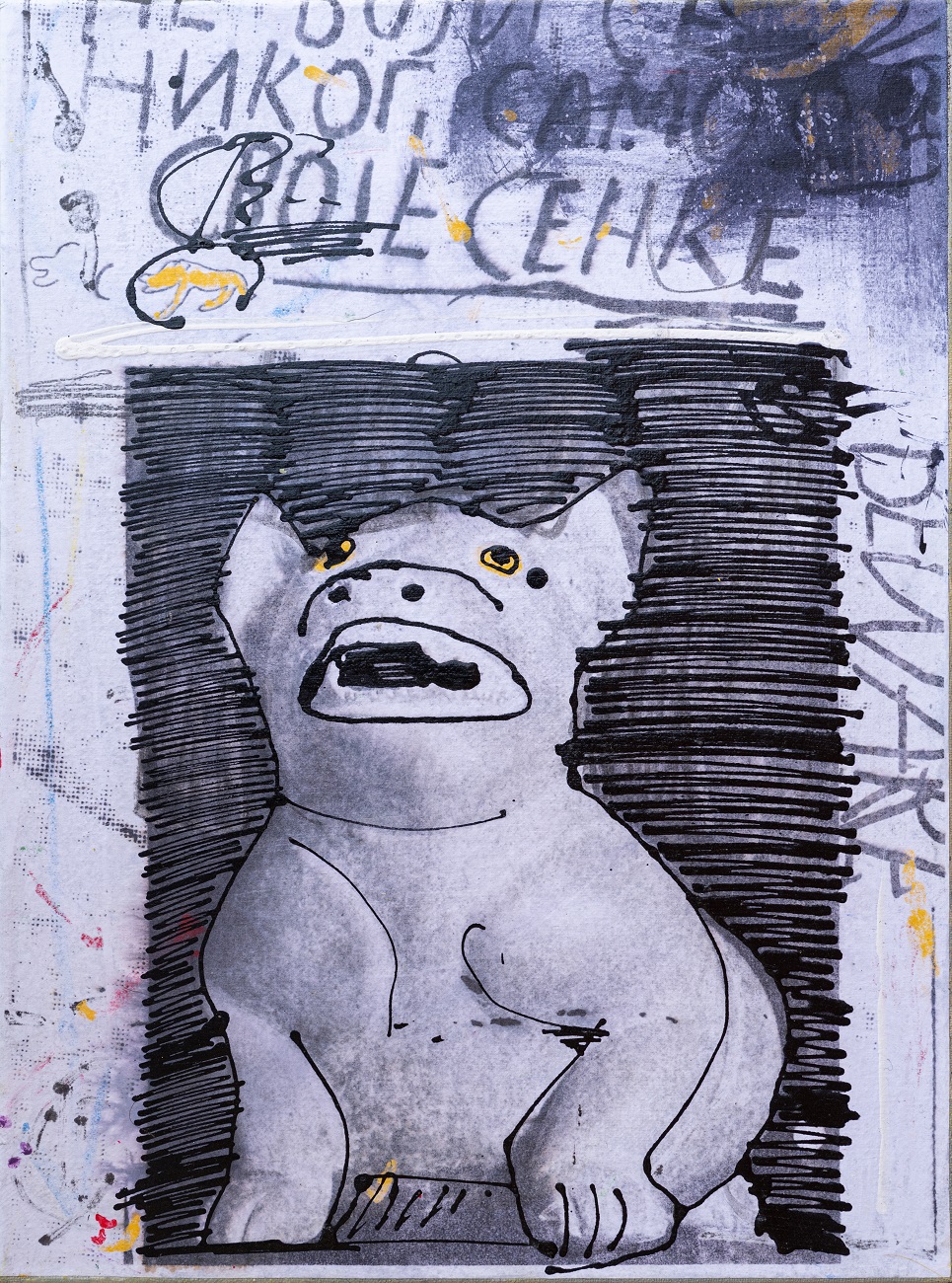
Even the notion of „givenness“ indicates the character of the initial trigger – something one meets with no previous knowledge, something that unexpectedly enters the artist’s field of vision – something that had been, until the moment of givenness, invisible or simply on the margins of the artist’s attention. The labels from the wrappings of various products, old printed illustrations, photographs or excerpts from the pages of books or albums randomly found in his walks through flee-markets – those are only a few examples of the “given situations” the artist physically inserts into the picture. However, this remark by Tepavčević does not refer only to the readymade details preserved in the painting, but also to the entire corps of “given” scenes, accidentally caught pieces of information, found objects – to all those phenomena from the margins of life that enter his own creative universe. The necessity of a “given situation” and the quality of marginality – make together the agent of authenticity in Tepavčević’s works and the fil rouge woven through all the levels of his creative process – from the contents to the concrete painterly procedure.
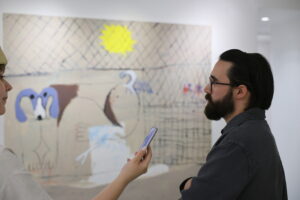
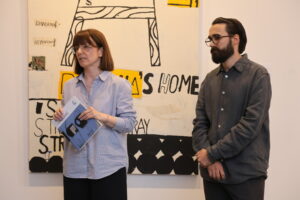
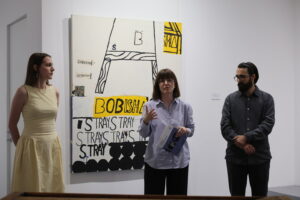
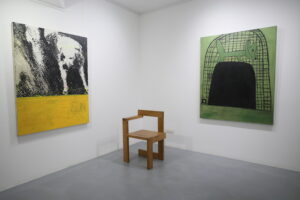
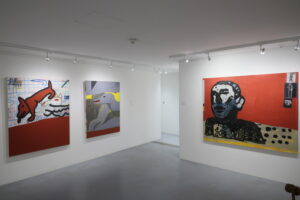
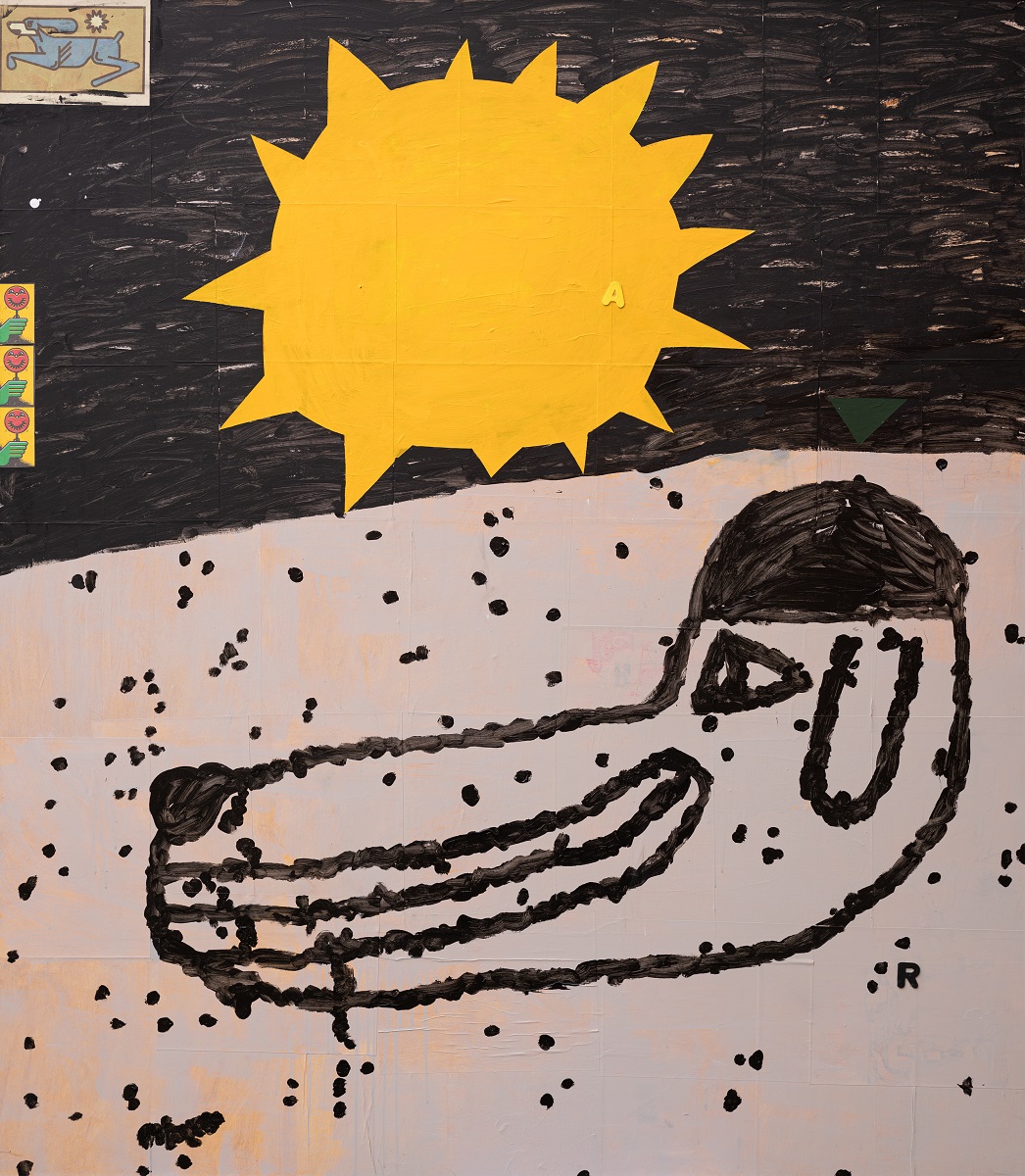
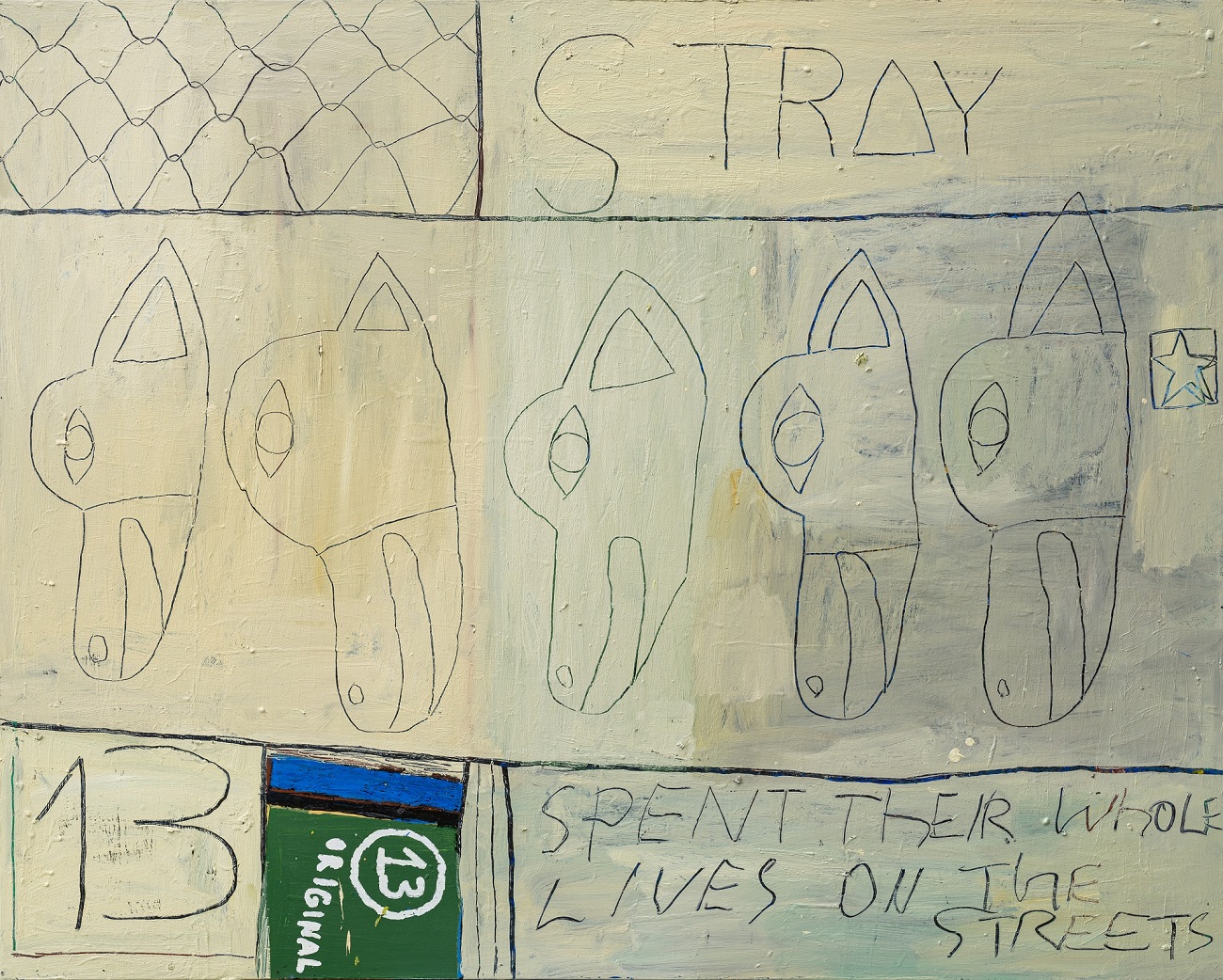
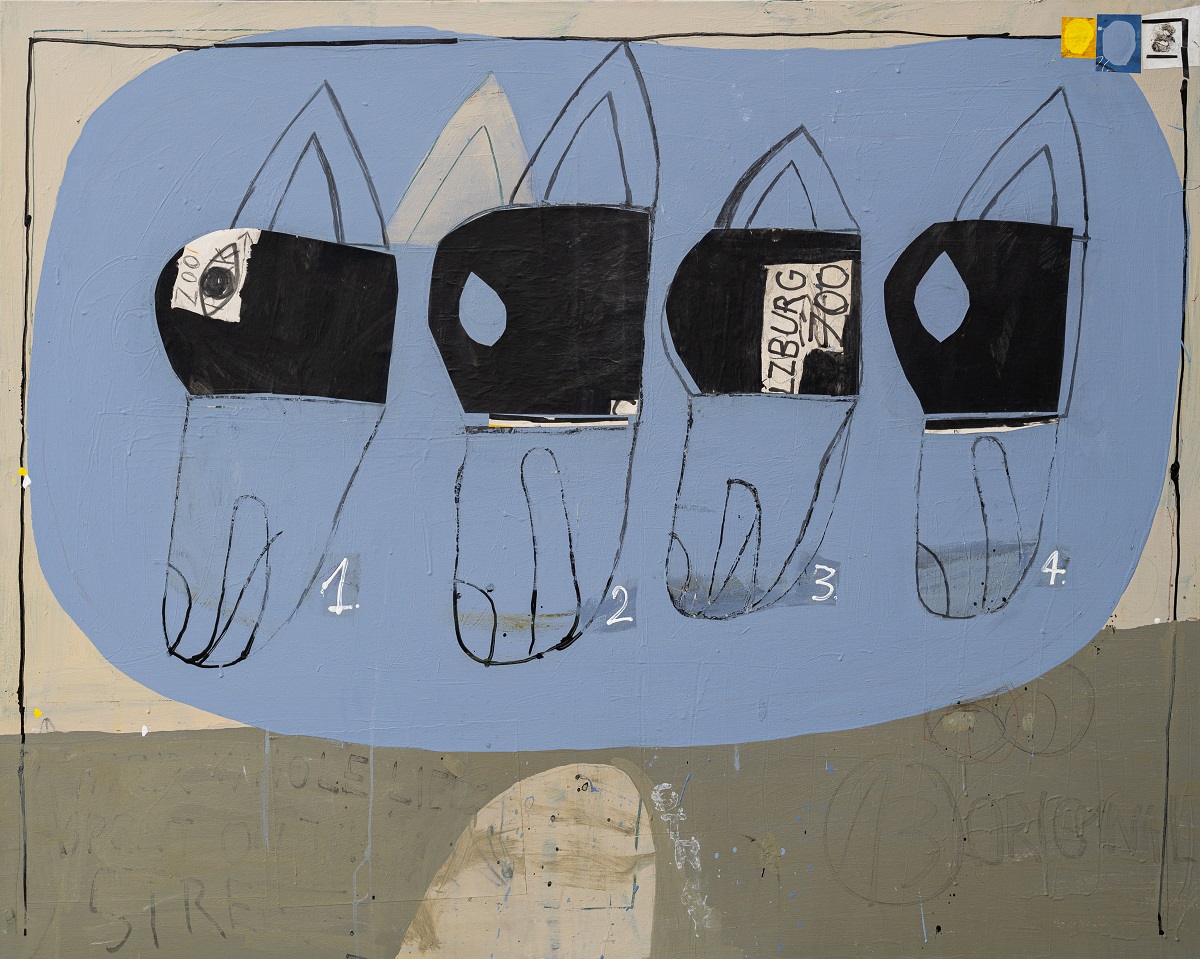
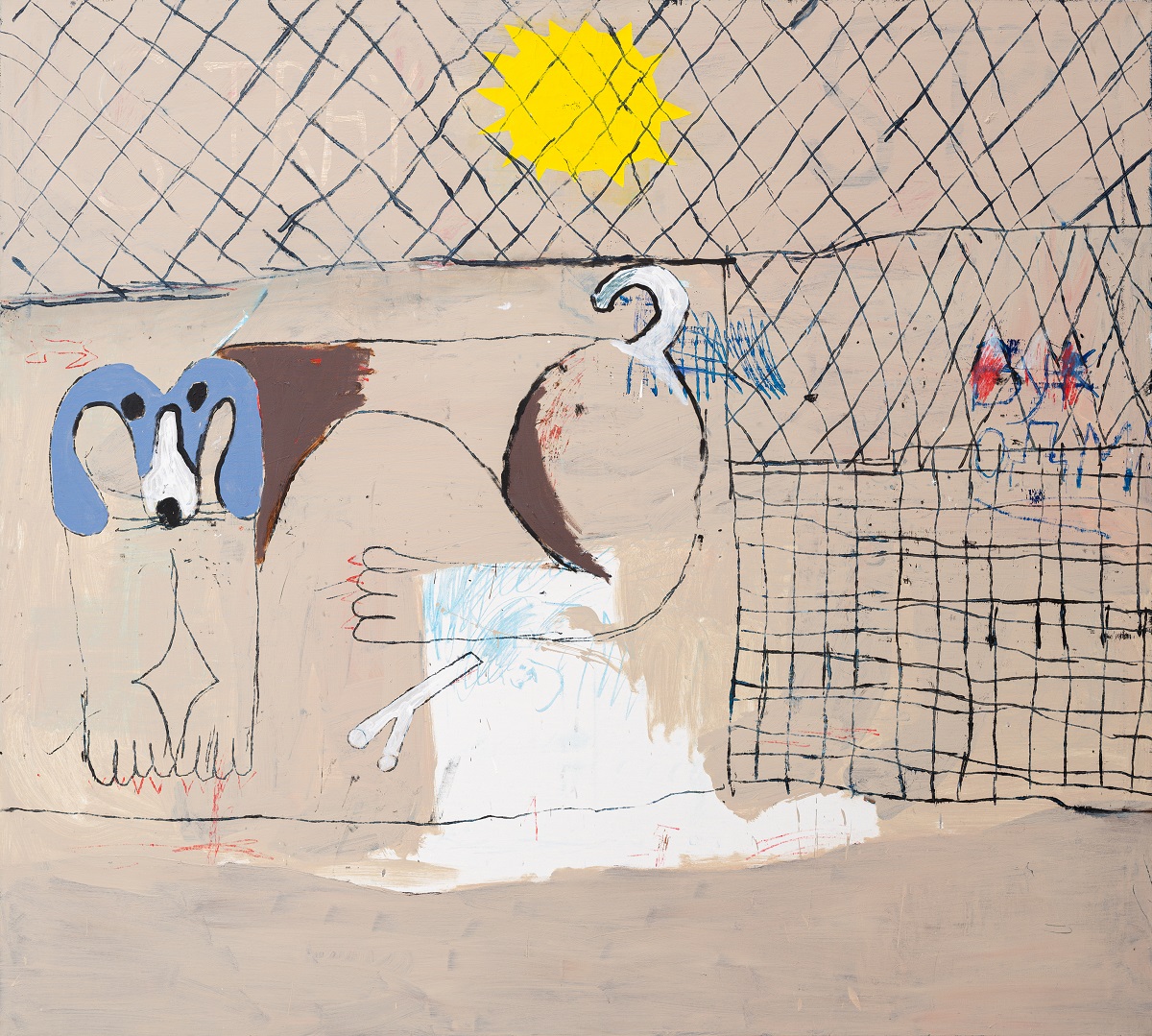
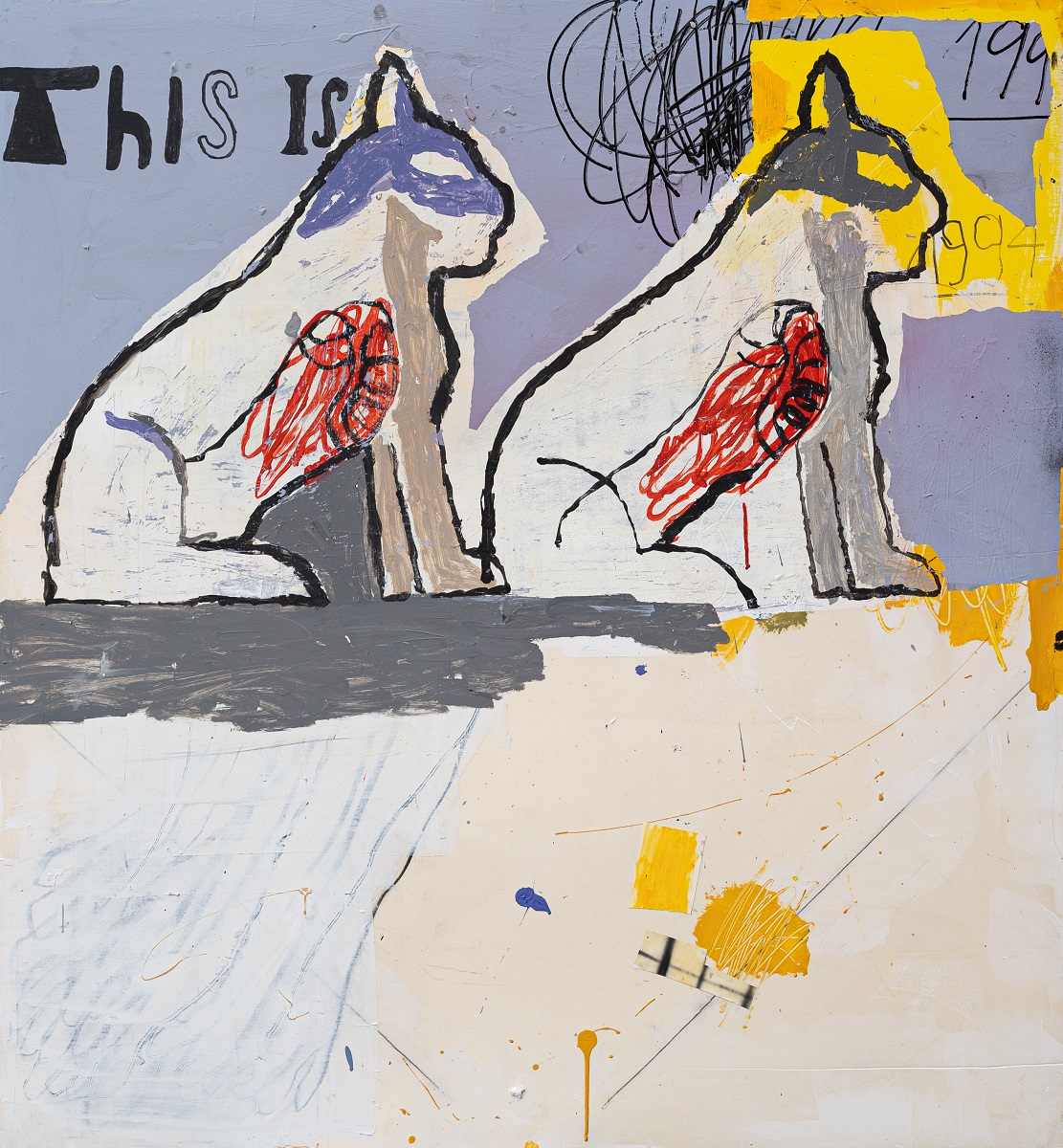
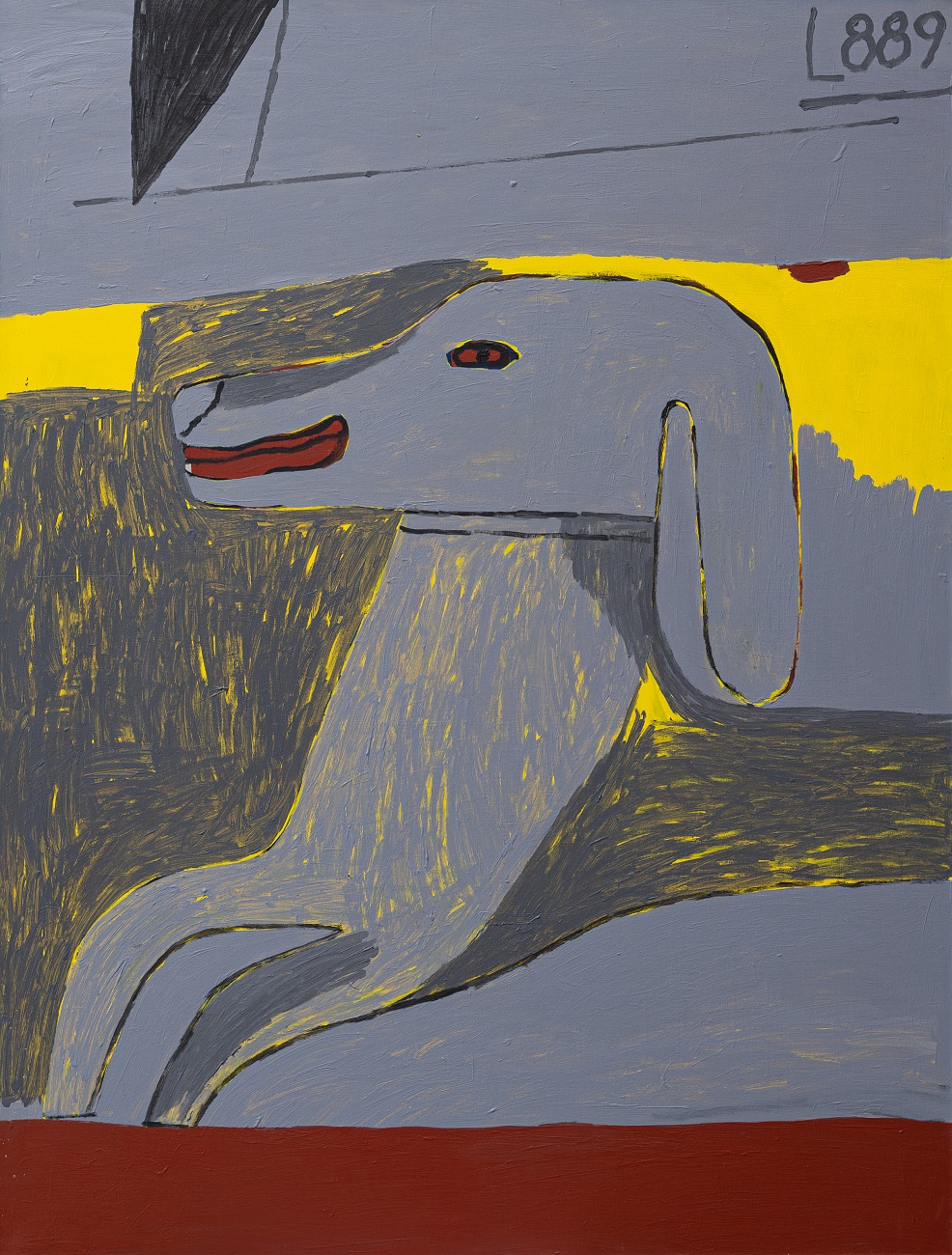
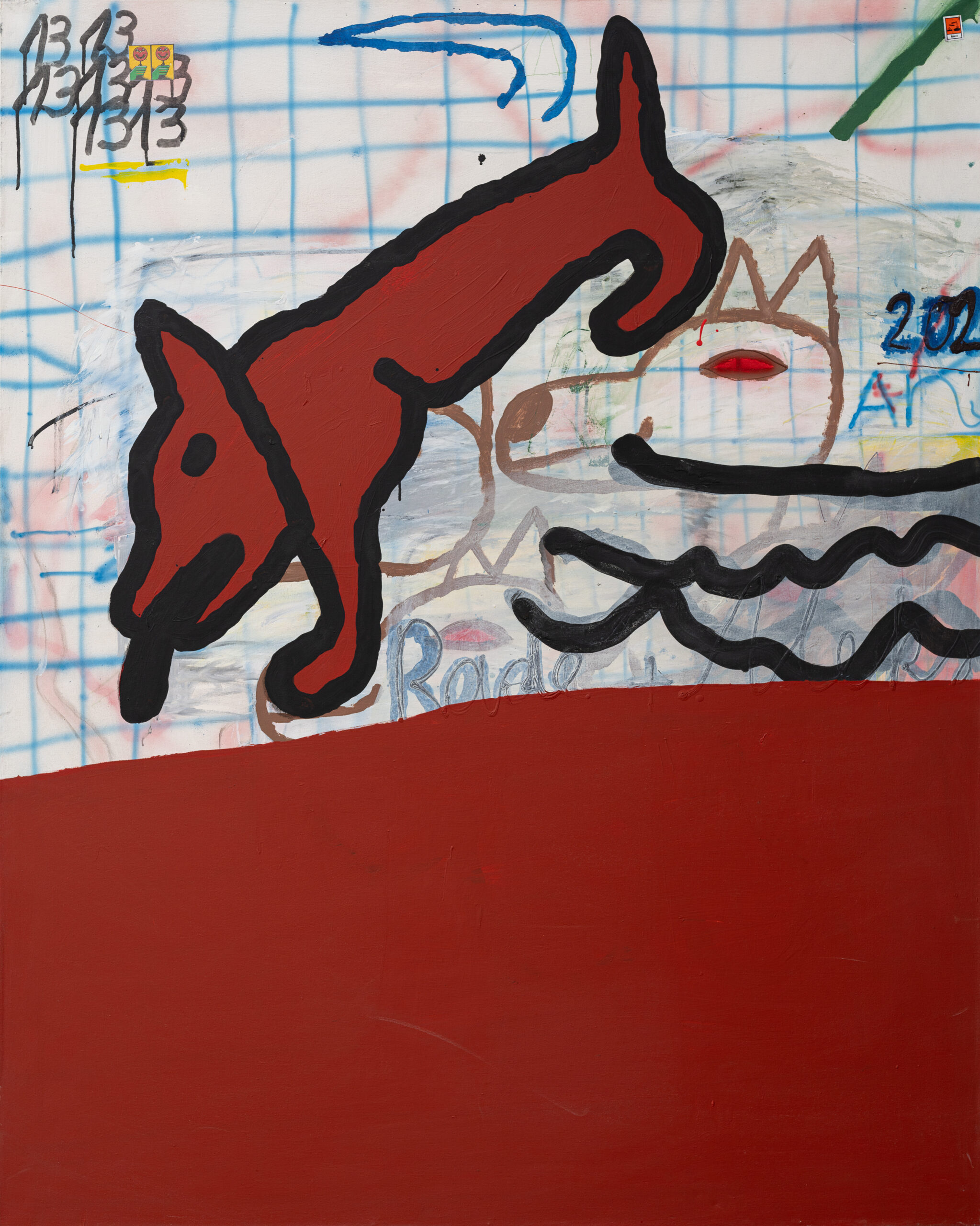
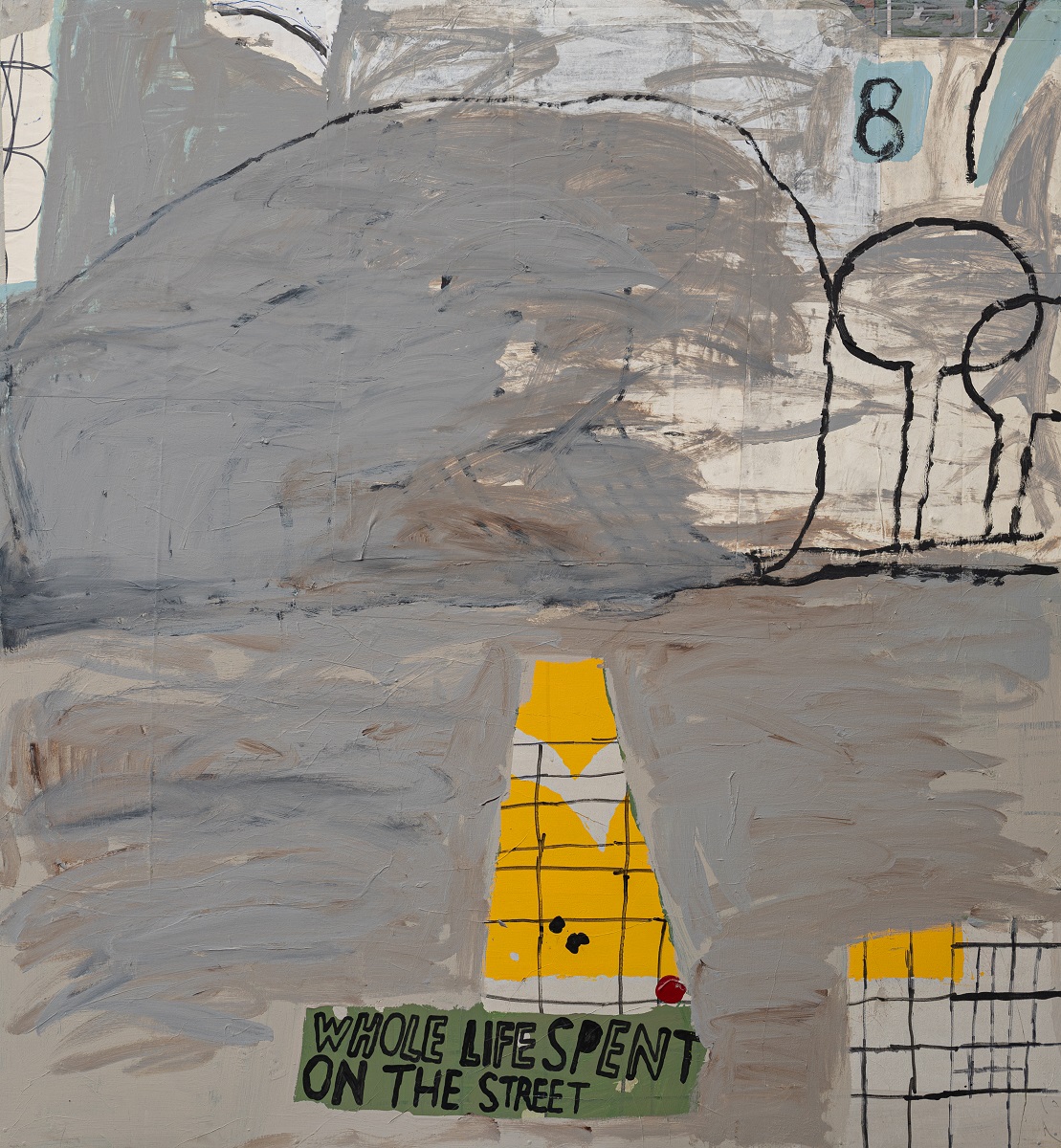
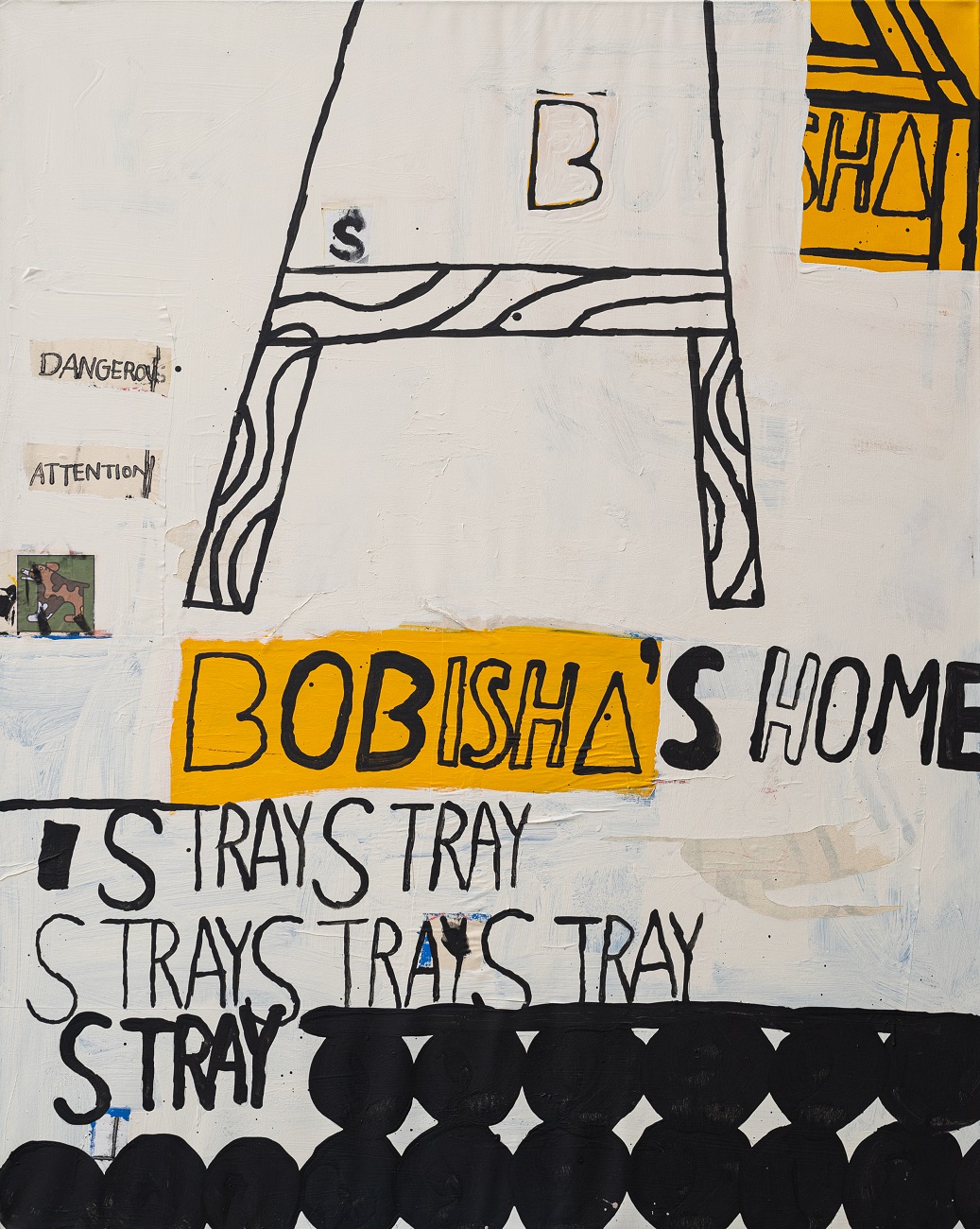
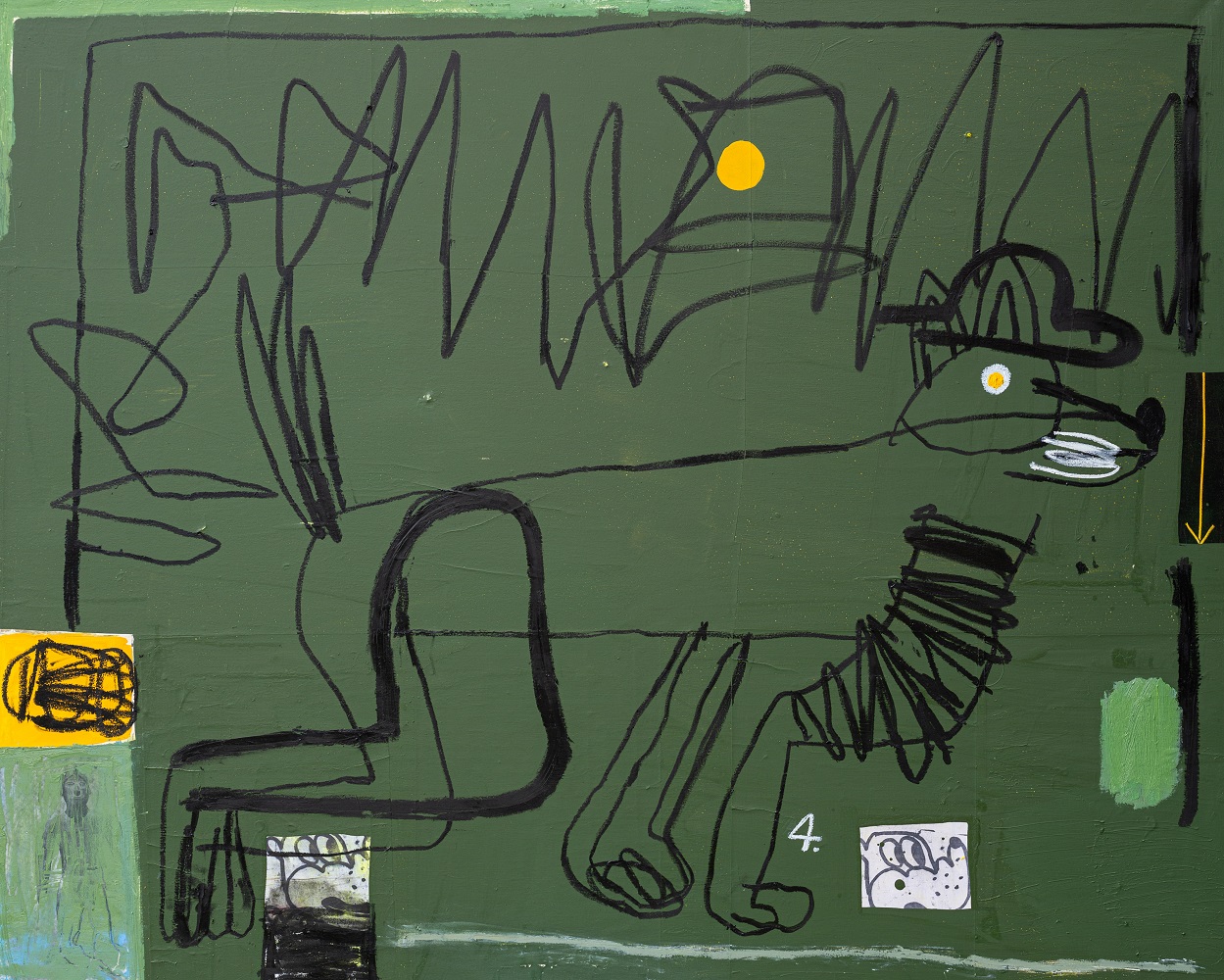
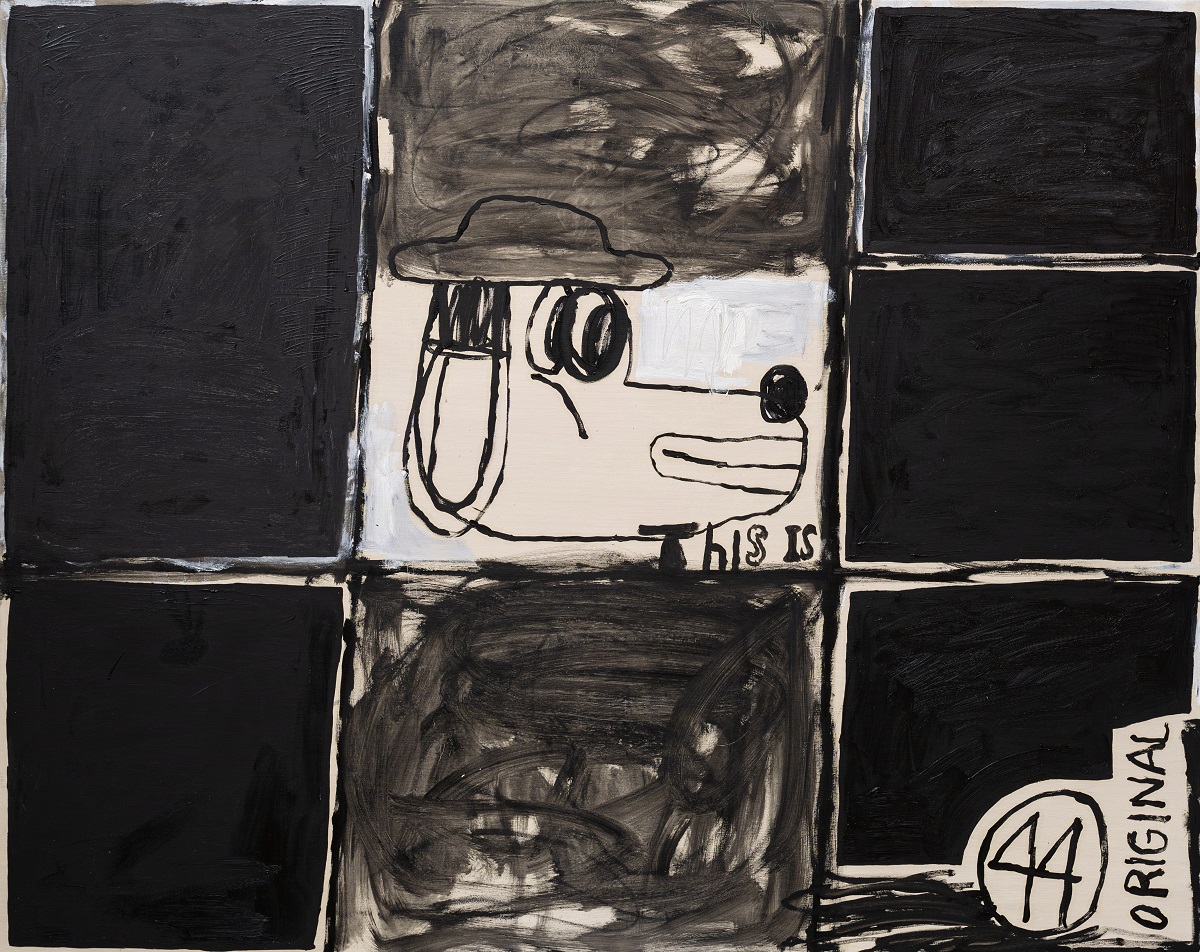
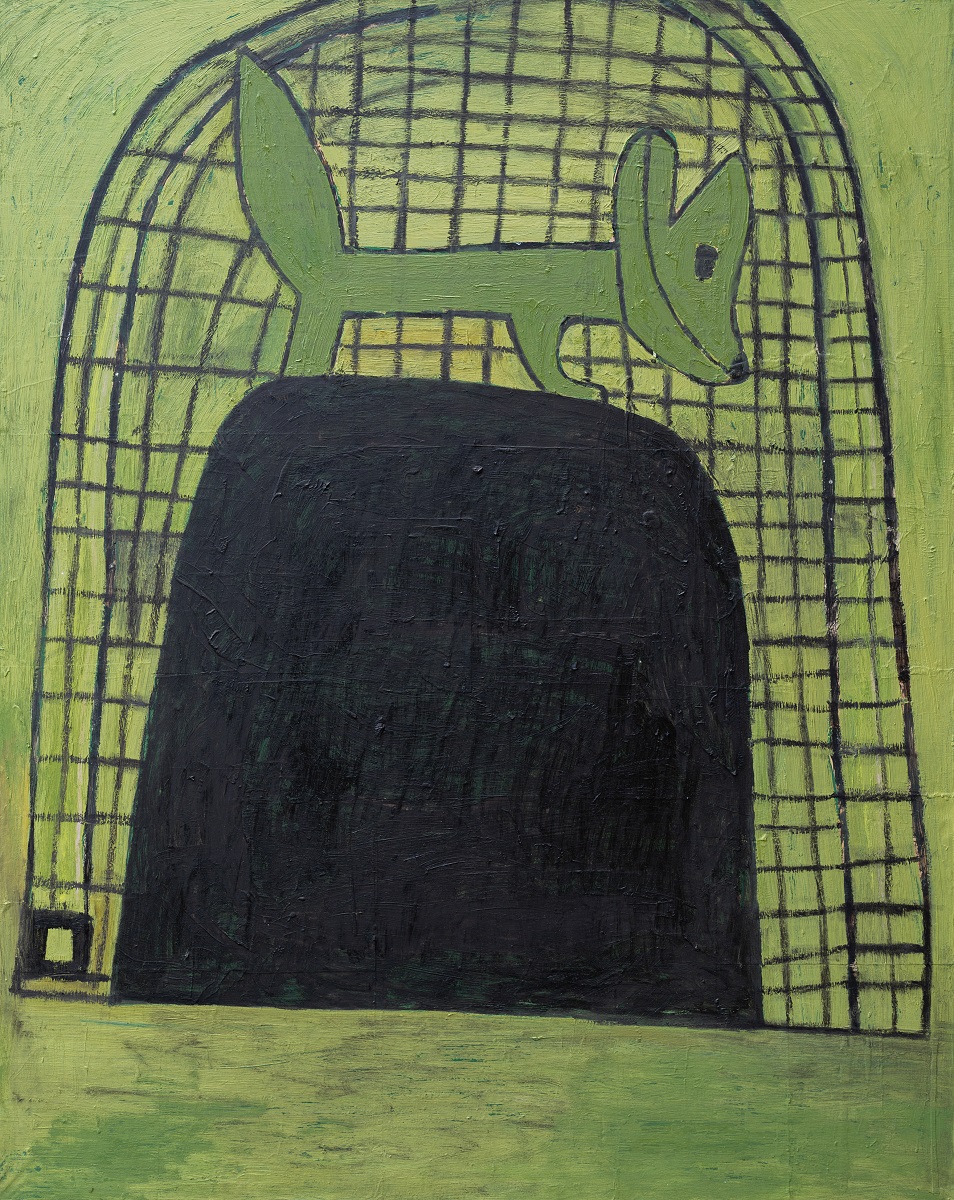
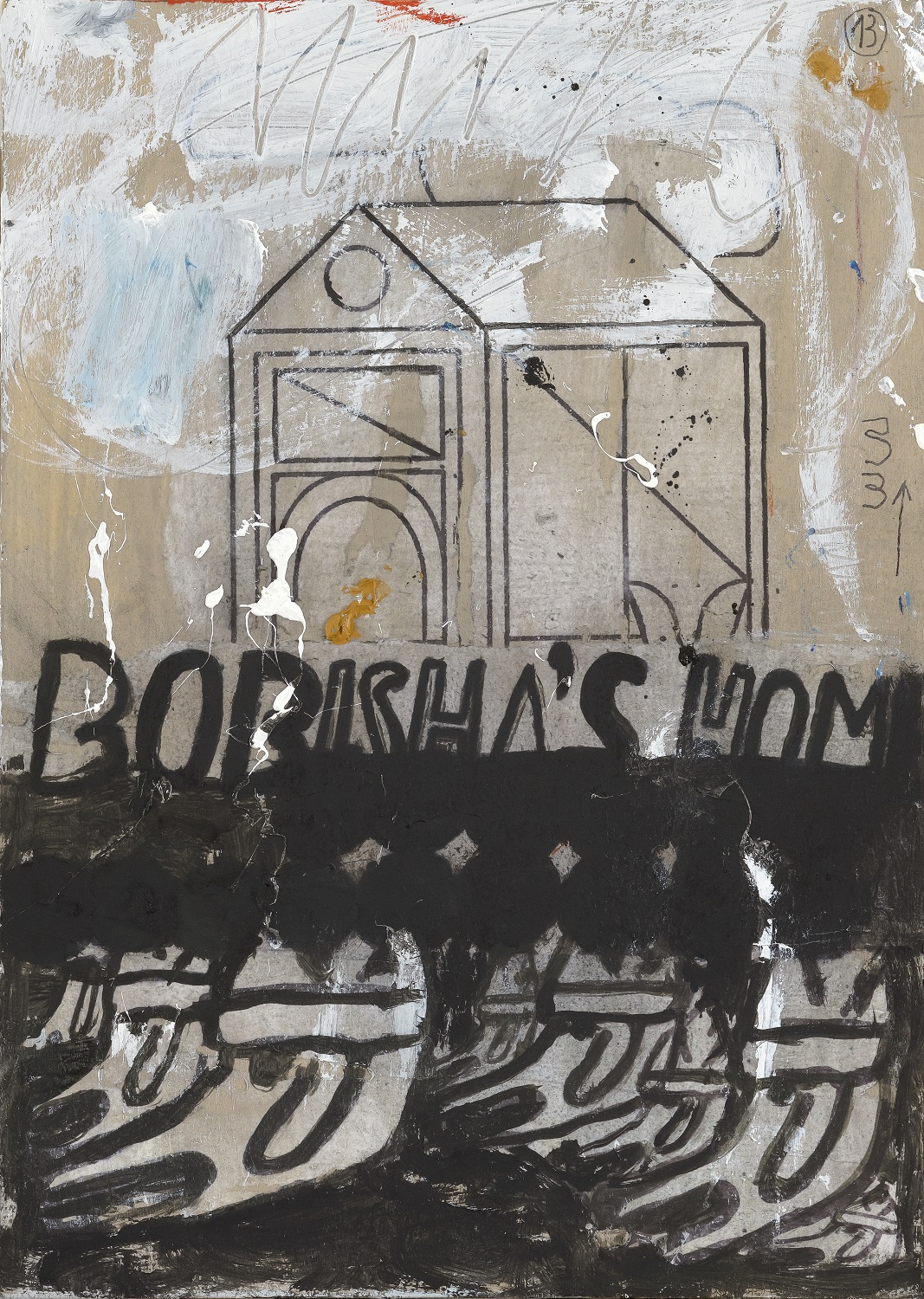
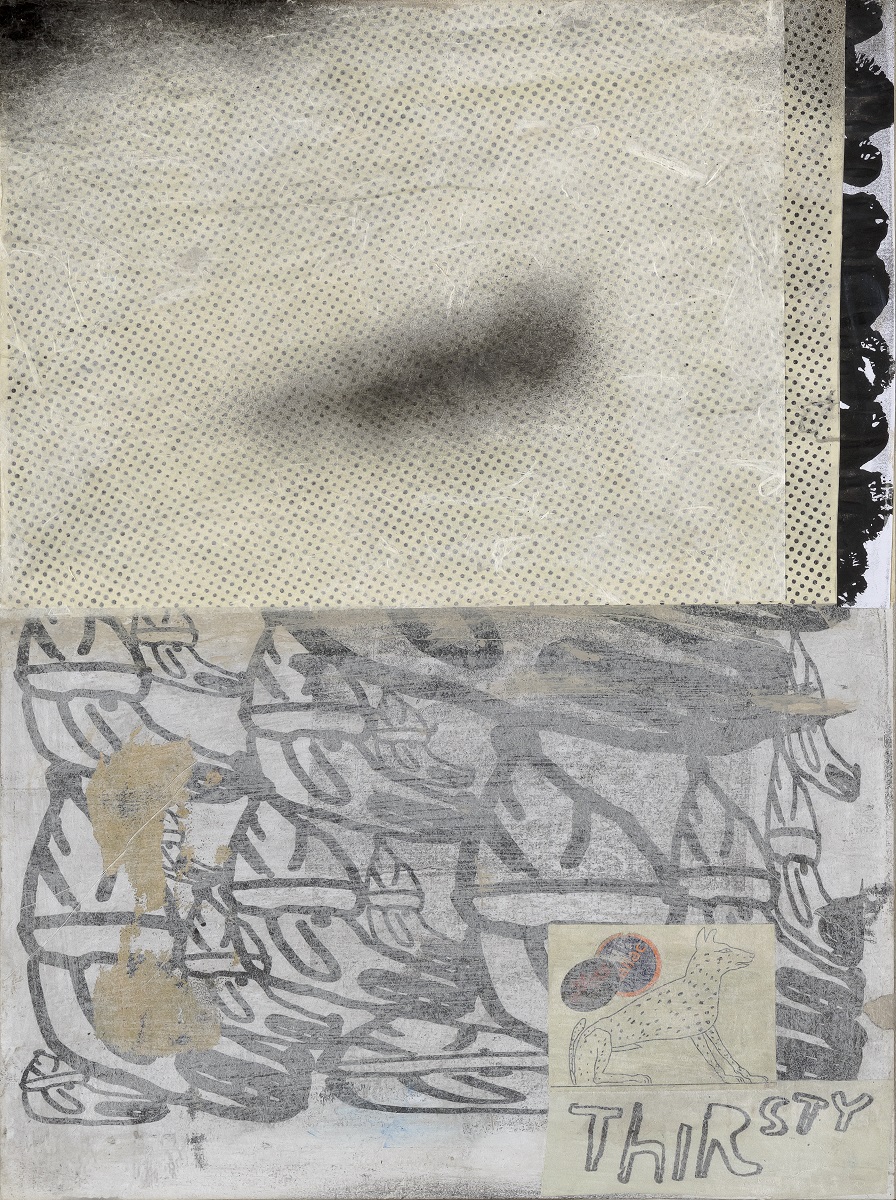
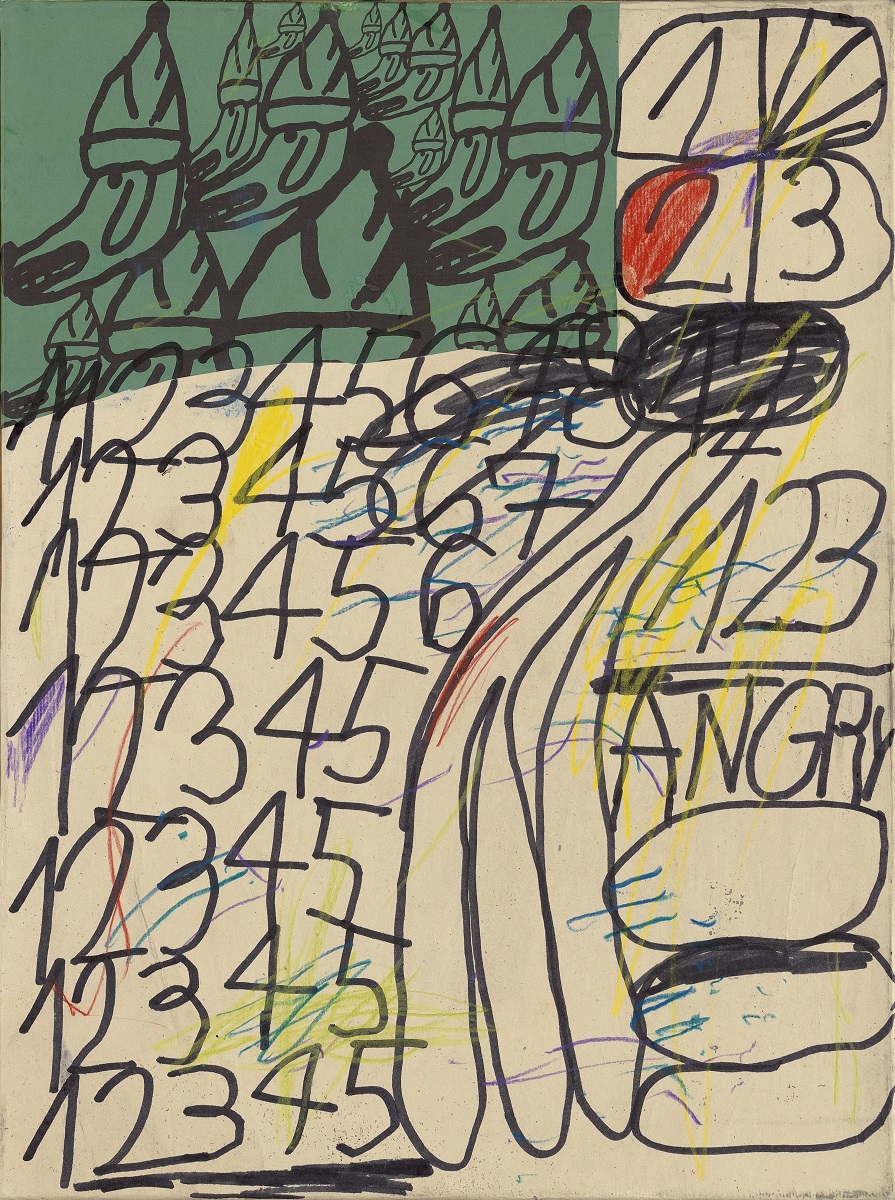
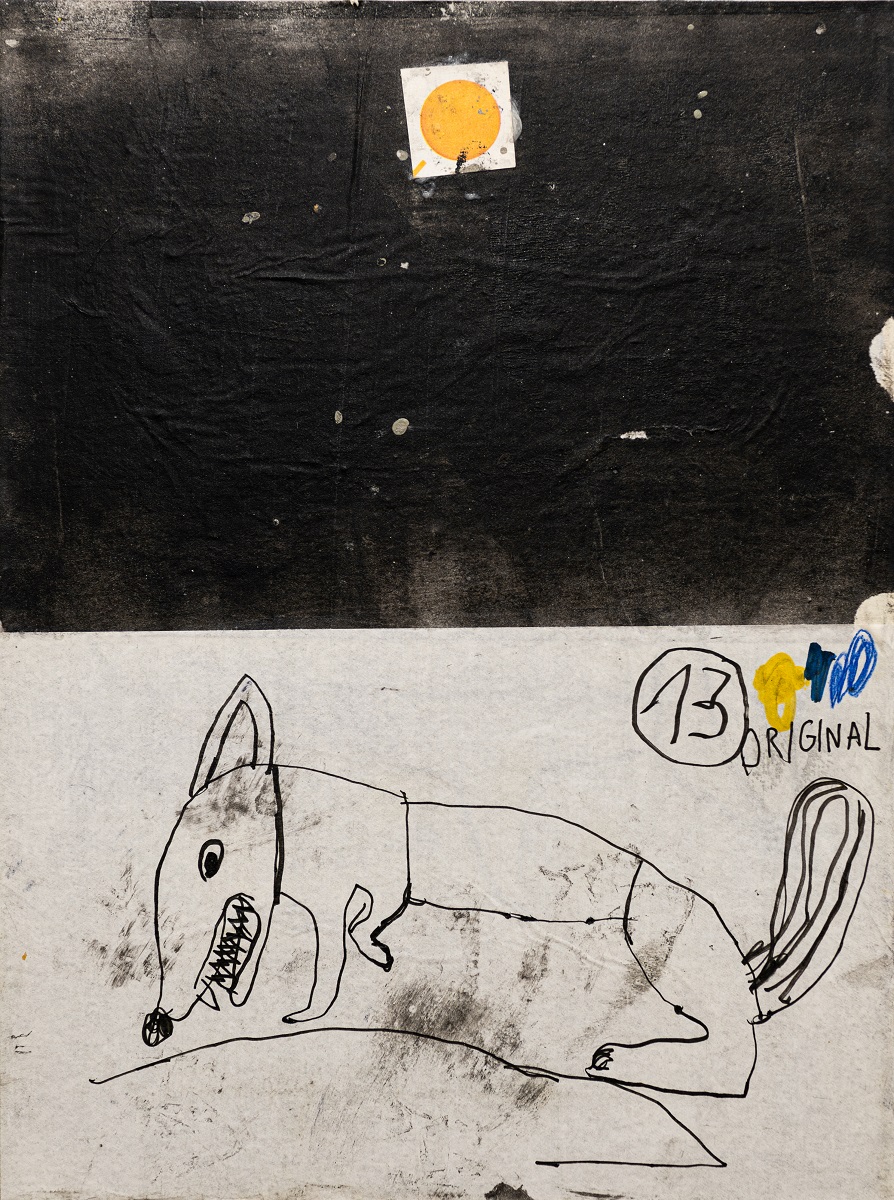
For many years the motif of the dog has represented the iconographic centre of Tepavčević’s pictures. Partially it is a real dog, for example a mongrel, named Bobiša, dating from the artist’s childhood. His name and the construction of his dog house (Bobisha’s home) represent the only elements that indicate Tepavčević’s own memories. Similarly, the elongated anatomy of the dog in certain works is inspired by his own pet dachshund. Nevertheless, more important than such references to the artist’s private world are those related to Tepavčević’s perception and thinking about a wider social reality. The artist is focused on stray dogs (Stray Dogs) whose existence is uncertain and grave, spent in the streets (Whole Life Spent on the Street) in aimless wandering among the city walls and sleeping in various dog houses (The Cramped Dog House). On the other hand, among those spared from the street destiny, the artist particularly draws his attention to dogs-prisoners, those deprived of freedom and left to the mercy of their masters (Cage¸ Prisoner). The board bearing the warning (Beware of the dog), the scenes of imprisoned dogs in special partitions or herds of stray dogs in the streets, the information that children threw firecrackers to dogs instead of rods – all of those are some randomly “given situations” that, indirectly, through the destiny of left or molested dogs, direct the artist’s interest to the backside of contemporary society.
(…)
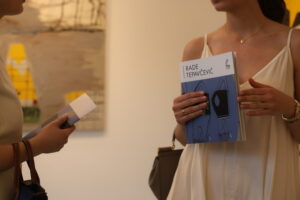
(Whole text in the printed edition)
Works
Publications